
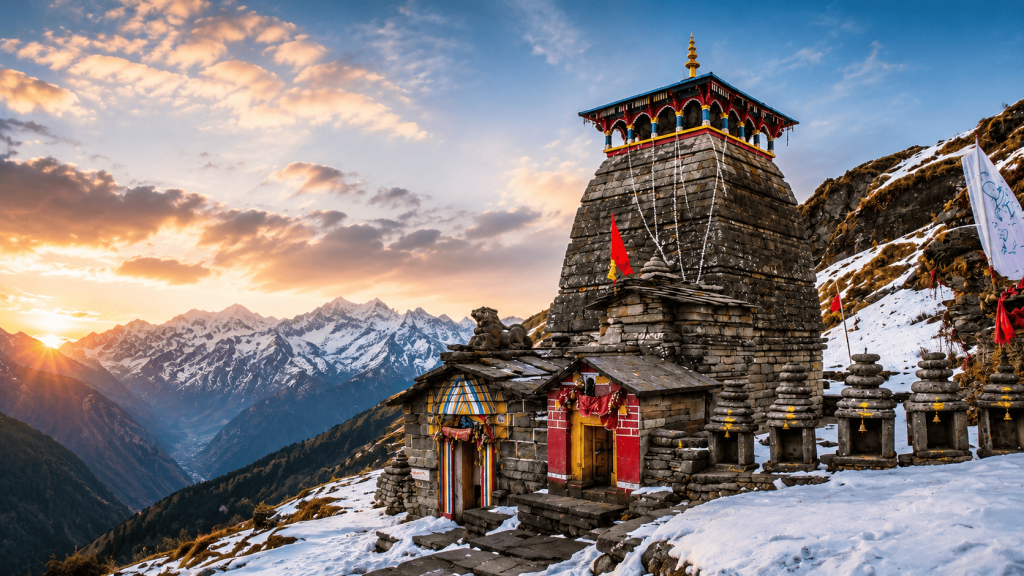
Tungnath Temple Guide: Trek, History, Weather & Darshan
3 August 2026 by admin

Tungnath Temple: Complete Travel Guide to History, Trek, Weather, Distance, Chandrashila & Darshan
Quick Travel Guide for Tungnath Temple
| Information | Details |
|---|---|
| Location | Rudraprayag District, Uttarakhand |
| Altitude | 3,680 metres (12,073 feet) |
| Deity | Lord Shiva |
| Significance | Second Kedar of the Panch Kedar |
| Nearest Base | Chopta |
| Trek Distance | 3.5 km from Chopta |
| Trek Difficulty | Easy to Moderate |
| Best Time to Visit | May–June and September–November |
| Temple Timings | 6:00 AM – 7:00 PM (Seasonal) |
| Nearest Airport | Jolly Grant Airport, Dehradun |
| Nearest Railway Station | Rishikesh |
| Nearby Attraction | Chandrashila Summit |
Overview
Tungnath Temple is one of the most revered shrines dedicated to Lord Shiva. Standing at an altitude of 3,680 metres (12,073 feet), it is widely regarded as the highest Shiva temple in the world. Surrounded by snow-clad peaks, alpine meadows, and dense forests, the temple offers a unique blend of spirituality, adventure, and breathtaking natural beauty.
Tungnath Temple is the second temple of the sacred Panch Kedar, a group of five ancient Shiva temples associated with the Mahabharata. Every year, thousands of pilgrims, trekkers, photographers, and nature lovers visit this Himalayan shrine to seek blessings and experience the serene mountain landscape.
One of the biggest attractions of the journey is the scenic 3.5 km trek from Chopta, often called the “Mini Switzerland of Uttarakhand.” Beyond the temple lies the famous Chandrashila Summit, which rewards visitors with panoramic views of Himalayan peaks such as Chaukhamba, Nanda Devi, Trishul, Kedar Dome, and Neelkanth.
Whether you are planning a spiritual pilgrimage, a weekend trek, or a peaceful escape into nature, Tungnath Temple promises an unforgettable experience.
History of Tungnath Temple
The history of Tungnath Temple is closely connected to both ancient Hindu traditions and the epic Mahabharata. While historians believe the present stone temple dates back several centuries, local traditions associate its origins with the Pandavas after the Kurukshetra War.
According to legend, the Pandavas sought forgiveness from Lord Shiva for the destruction caused during the war. However, Lord Shiva wished to avoid them and took the form of a bull (Nandi). When Bhima recognized him, Shiva disappeared into the earth, and different parts of his divine body appeared at five locations across the Garhwal Himalayas. These sacred sites later became known as the Panch Kedar temples.
At Tungnath, Lord Shiva’s arms are believed to have appeared. The Pandavas are said to have built the original shrine to worship him and seek redemption.
Over the centuries, the temple has remained an important center of faith. Despite enduring heavy snowfall and harsh Himalayan weather every year, its stone architecture continues to stand strong, reflecting the remarkable craftsmanship of ancient builders.
The temple also preserves centuries-old rituals, Vedic traditions, and local customs that continue to be followed during the annual pilgrimage season.
Mythological Significance
Tungnath Temple holds immense spiritual importance because it forms an integral part of the Panch Kedar Yatra.
According to Hindu beliefs, visiting all five Panch Kedar temples helps devotees seek Lord Shiva’s blessings and symbolizes a journey of devotion, repentance, and spiritual growth.
The five temples are:
- Kedarnath Temple – Hump (Back)
- Madhyamaheshwar Temple – Navel and stomach
- Tungnath Temple – Arms
- Rudranath Temple – Face
- Kalpeshwar Temple – Hair (Jata)
The name “Tungnath” combines two Sanskrit words: “Tung,” meaning lofty or high, and “Nath,” meaning Lord. Together, the name translates to “Lord of the Peaks,” perfectly reflecting the temple’s location high in the Himalayas.
Why Visit Tungnath Temple?
Tungnath is much more than a pilgrimage destination. It offers an experience that combines faith, nature, and adventure.
Visitors come here to:
- Seek the blessings of Lord Shiva at the world’s highest Shiva temple.
- Complete the sacred Panch Kedar pilgrimage.
- Enjoy one of Uttarakhand’s most scenic Himalayan treks.
- Witness spectacular sunrise and sunset views over snow-covered peaks.
- Trek to Chandrashila Summit for breathtaking panoramic views.
- Escape the crowds and experience the peaceful atmosphere of the Garhwal Himalayas.
- Explore the rich mythology and heritage associated with the Mahabharata.
For many travellers, the journey to Tungnath becomes as memorable as the destination itself.

Best Time to Visit Tungnath Temple
Tungnath Temple opens only during the pilgrimage season because the region receives heavy snowfall in winter. Choosing the right season can make your journey safer, more comfortable, and more enjoyable.
Summer (May to June)
Summer is the most popular time to visit Tungnath Temple. The snow begins to melt, the trekking trail becomes accessible, and the surrounding meadows turn lush green. Daytime temperatures usually range between 10°C and 20°C, making it ideal for both pilgrims and trekkers.
This season is perfect for:
- Tungnath Temple darshan
- Chopta–Tungnath trek
- Chandrashila Summit trek
- Photography
- Family trips
Since it is the peak pilgrimage season, expect larger crowds during weekends and holidays.
Monsoon (July to August)
The Garhwal Himalayas receive moderate to heavy rainfall during the monsoon. Although the forests become vibrant and waterfalls flow at full strength, landslides and slippery trekking trails can make travel challenging.
If you plan to visit during this season:
- Check the weather forecast before starting your journey.
- Avoid trekking during heavy rainfall.
- Carry waterproof clothing and trekking shoes with good grip.
Autumn (September to November)
Autumn is considered one of the best seasons for visiting Tungnath Temple. The skies remain clear after the monsoon, offering spectacular views of the Himalayan peaks. The weather stays cool and pleasant, making trekking comfortable.
This season is especially popular among photographers because the mountain landscapes look exceptionally clear and vibrant.
Winter (December to April)
Heavy snowfall covers Tungnath and the surrounding region during winter. As a result, the temple remains closed, and the idol of Lord Shiva is ceremonially moved to Makkumath Village, where worship continues until the temple reopens.
Although experienced trekkers visit Chopta during winter to enjoy snow trekking, reaching the temple may not always be possible due to snow accumulation and weather conditions.
Tungnath Temple Weather
The weather in the Himalayas can change quickly. Even during summer, mornings and evenings remain cold. Carrying warm clothing is essential throughout the pilgrimage season.
| Season | Temperature | Weather |
|---|---|---|
| Summer | 10°C to 20°C | Pleasant and clear |
| Monsoon | 8°C to 18°C | Rainy and misty |
| Autumn | 5°C to 15°C | Cool with clear skies |
| Winter | -10°C to 5°C | Heavy snowfall |
What Should You Carry?
Pack wisely for a comfortable journey. Essential items include:
- Warm jacket
- Comfortable trekking shoes
- Woollen cap and gloves
- Raincoat or poncho (during monsoon)
- Sunglasses and sunscreen
- Water bottle
- Energy snacks
- Personal medicines
- Power bank
- Torch or headlamp if starting early
How to Reach Tungnath Temple?
Reaching Tungnath Temple is straightforward. Travelers first arrive at Chopta, the base point for the trek, and then complete a scenic 3.5 km hike to the temple.
By Air
The nearest airport is Jolly Grant Airport, Dehradun, located about 220 km from Chopta. From the airport, taxis and buses are available to reach Rudraprayag, Ukhimath, and Chopta.
By Train
The nearest railway stations are:
- Rishikesh Railway Station – Approximately 205 km
- Haridwar Railway Station – Approximately 225 km
Regular buses and shared taxis operate from both cities toward Rudraprayag and Ukhimath.
By Road
Chopta enjoys good road connectivity with major towns in Uttarakhand.
Popular road routes include:
Delhi → Haridwar → Rishikesh → Devprayag → Srinagar → Rudraprayag → Ukhimath → Chopta
Private taxis, self-drive vehicles, and state transport buses are commonly used for this journey.
Chopta to Tungnath Temple Trek
The trek from Chopta to Tungnath Temple is among the easiest Himalayan treks in India. Since the trail is well paved with stone pathways, beginners and families can complete it comfortably with moderate fitness.
Trek Overview
- Distance: Approximately 3.5 km (one way)
- Time Required: 2–3 hours uphill
- Difficulty: Easy to Moderate
- Highest Altitude: 3,680 metres
The route passes through dense forests of oak and rhododendron before opening into beautiful alpine meadows. During spring, colorful rhododendron flowers bloom across the hillsides, creating a picturesque landscape.
As you climb higher, magnificent views of the Chaukhamba range begin to appear. Along the trail, small tea stalls provide refreshments, allowing trekkers to rest and enjoy the mountain scenery.
The final stretch leads directly to the ancient stone temple, where the peaceful atmosphere and breathtaking surroundings make every step worthwhile.
Chandrashila Summit Trek
Many visitors continue beyond Tungnath Temple to reach the famous Chandrashila Summit, one of Uttarakhand’s most rewarding viewpoints.
Trek Details
- Distance from Tungnath: Approximately 1.5 km
- Altitude: Around 4,000 metres (13,123 feet)
- Time Required: 45–60 minutes
Although the climb is steeper than the Tungnath trek, the trail remains manageable for most trekkers.
From the summit, visitors can enjoy panoramic views of several Himalayan peaks, including:
- Chaukhamba
- Nanda Devi
- Trishul
- Kedar Dome
- Neelkanth
- Bandarpoonch
According to Hindu tradition, Lord Rama is believed to have meditated at Chandrashila after defeating Ravana. This spiritual association makes the summit an important destination for both pilgrims and trekkers.
Sunrise at Chandrashila is particularly spectacular, attracting photographers and adventure enthusiasts from across the country.
Distance Chart
| Destination | Distance |
|---|---|
| Chopta to Tungnath | 3.5 km (Trek) |
| Tungnath to Chandrashila | 1.5 km (Trek) |
| Ukhimath to Chopta | 30 km |
| Rudraprayag to Chopta | 65 km |
| Guptkashi to Chopta | 50 km |
| Rishikesh to Chopta | 205 km |
| Haridwar to Chopta | 225 km |
| Dehradun to Chopta | 250 km |
| Jolly Grant Airport to Chopta | 220 km |

Temple Timings & Darshan
Tungnath Temple remains open only during the pilgrimage season, generally from late April or May until October or November. The exact opening and closing dates are announced every year according to the Hindu calendar.
Temple Timings
| Activity | Time |
|---|---|
| Temple Opens | 6:00 AM |
| Morning Darshan | 6:00 AM – 1:00 PM |
| Evening Darshan | 2:00 PM – 7:00 PM |
| Temple Closes | Around 7:00 PM |
Note: Timings may vary slightly during festivals or due to weather conditions.
Darshan Tips
- Start your trek early in the morning to avoid crowds.
- Wear comfortable clothing suitable for mountain weather.
- Respect local customs and maintain silence inside the temple.
- Photography is generally not permitted inside the sanctum.
- Avoid littering and help preserve the temple’s natural surroundings.
Accommodation Near Tungnath Temple
Since there are no hotels at the temple itself, most visitors stay in Chopta, Dugalbitta, Baniyakund, or Ukhimath.
Hotels and Homestays
Chopta offers a variety of accommodation options, including:
- Budget hotels
- Mountain-view cottages
- Local homestays
- Eco-lodges
- Campsites
Homestays provide an excellent opportunity to experience the warm hospitality of the local people while enjoying traditional Garhwali cuisine.
During the peak pilgrimage season, book your accommodation in advance, especially on weekends and holidays.
Food & Facilities
Although Tungnath is located in a remote Himalayan region, basic facilities are available along the trekking route and in Chopta.
Food Options
You can find:
- Tea and coffee
- Maggi noodles
- Parathas
- Rice and dal
- Seasonal vegetables
- Local Garhwali meals
- Packaged snacks
Most food stalls remain open only during the pilgrimage season.
Available Facilities
- Drinking water points
- Public toilets (limited)
- Parking at Chopta
- Small shops selling raincoats, walking sticks, gloves, and snacks
- Mobile network availability (limited and varies by provider)
There are no ATMs near the temple, so carry sufficient cash before reaching Chopta.
Nearby Attractions
Your visit to Tungnath Temple can easily be combined with several nearby destinations.
Chandrashila Summit
Located about 1.5 km beyond Tungnath, Chandrashila offers one of the finest panoramic views in the Garhwal Himalayas.
Chopta
Often called the “Mini Switzerland of Uttarakhand,” Chopta is known for its lush meadows, dense forests, and peaceful atmosphere. It serves as the base camp for the Tungnath trek.
Deoria Tal
Situated around 20 km from Chopta, Deoria Tal is a picturesque high-altitude lake famous for reflecting the Chaukhamba peaks on clear mornings.
Ukhimath
Ukhimath is an important pilgrimage town where the idols of Kedarnath and Madhyamaheshwar are worshipped during winter. It also serves as a convenient stop for travelers heading toward Panch Kedar temples.
Kedarnath Wildlife Sanctuary
Nature lovers can explore the surrounding forests, home to diverse Himalayan flora and fauna, including musk deer, Himalayan monal, and various bird species.
Essential Travel Tips
A little preparation can make your journey safer and more enjoyable.
- Start your trek early in the morning.
- Carry enough drinking water.
- Wear sturdy trekking shoes with good grip.
- Dress in layers, as temperatures can change quickly.
- Keep a basic first-aid kit and essential medicines.
- Avoid carrying plastic waste back into nature.
- Respect local traditions and temple rules.
- Check road and weather conditions before traveling.
- If you’re not accustomed to high altitudes, walk at a steady pace and take short breaks when needed.
Frequently Asked Questions
Is Tungnath Temple the highest Shiva temple in the world?
Yes. At an altitude of 3,680 metres (12,073 feet), Tungnath is widely regarded as the highest Shiva temple in the world.
Why is Tungnath called the Second Kedar?
According to Hindu tradition, Lord Shiva’s arms appeared at Tungnath after the events of the Mahabharata, making it the second temple in the sacred Panch Kedar pilgrimage.
How difficult is the Tungnath trek?
The 3.5 km trek from Chopta is considered easy to moderate. Most beginners with reasonable fitness can complete it comfortably.
Can beginners trek to Tungnath?
Yes. The well-paved trail makes it one of the most beginner-friendly Himalayan treks. However, walking slowly and staying hydrated is recommended.
How far is Chandrashila from Tungnath Temple?
Chandrashila Summit is approximately 1.5 km from Tungnath Temple.
Is accommodation available near Tungnath?
Yes. Hotels, camps, cottages, and homestays are available in Chopta, Dugalbitta, Baniyakund, and Ukhimath.
When does Tungnath Temple open?
The temple usually opens in late April or May, shortly after Kedarnath Temple opens. The dates are announced annually according to the Hindu calendar.
Can I visit Tungnath Temple in winter?
The temple remains closed during winter because of heavy snowfall. During this period, the idol of Lord Shiva is worshipped at Makkumath Village.
Conclusion
Tungnath Temple is more than just a pilgrimage destination—it is a place where spirituality, history, and nature come together in the heart of the Himalayas. As the Second Kedar and the highest Shiva temple in the world, it holds immense religious significance while offering one of Uttarakhand’s most scenic trekking experiences.
Whether you seek Lord Shiva’s blessings, wish to complete the Panch Kedar Yatra, or dream of witnessing a Himalayan sunrise from Chandrashila, the journey to Tungnath promises memories that will last a lifetime. Plan your trip carefully, respect the local culture, and take time to enjoy the serenity of this sacred mountain shrine.
Disclaimer
The information in this guide is intended for general travel and pilgrimage planning. Temple timings, opening and closing dates, road conditions, weather, accommodation availability, and trekking regulations may change due to seasonal conditions or decisions by local authorities. Always verify the latest updates before starting your journey and follow official advisories for a safe and respectful pilgrimage.