
Salasar Balaji Temple: History, Miracles, Darshan Timings & Complete Travel Guide
3 July 2026 by admin

Salasar Balaji Temple: History, Miracles, Darshan Timings & Complete Travel Guide
The Salasar Balaji Temple stands among the most revered temples dedicated to Lord Hanuman in India. Located in the peaceful town of Salasar in Rajasthan’s Churu district, this sacred shrine welcomes millions of devotees every year. People from every corner of the country visit the temple to seek blessings, offer prayers, and experience its divine atmosphere.
Introduction
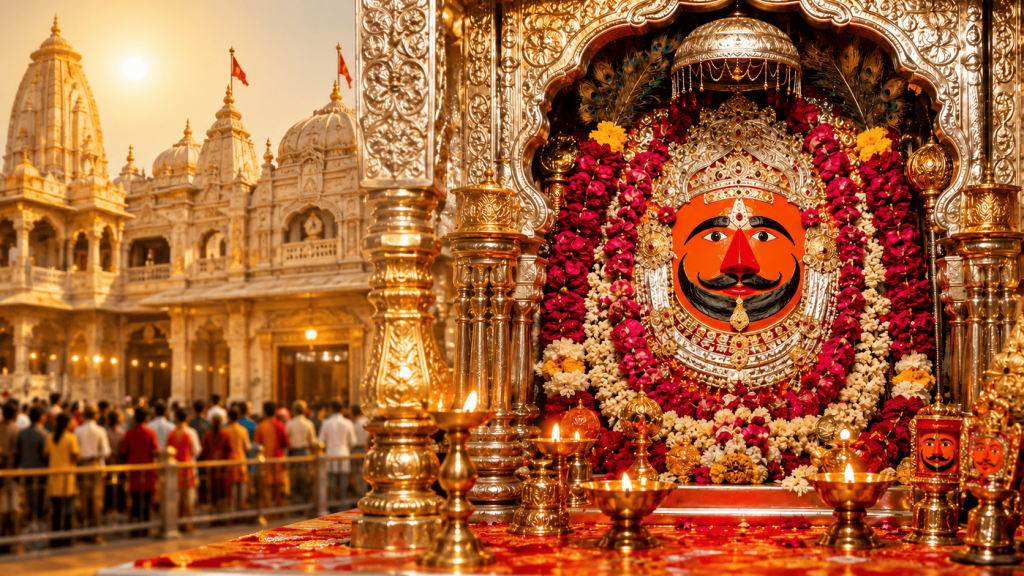
Unlike many Hanuman temples, Salasar Balaji features a unique idol with a beard and moustache. Consequently, devotees immediately recognize this rare form of Lord Hanuman. Many pilgrims also believe that sincere prayers offered here bring courage, prosperity, good health, and peace of mind.
Moreover, the temple attracts spiritual seekers, history enthusiasts, and travelers alike. Its fascinating history, remarkable legends, and vibrant festivals make it one of Rajasthan’s most important pilgrimage destinations. Whether you are planning your first visit or looking for detailed information, this guide covers everything you need to know about the Salasar Balaji Temple in 2026.
History of Salasar Balaji Temple
The history of the Salasar Balaji Temple dates back to the 18th century and reflects deep faith, devotion, and divine intervention.
According to local tradition, a farmer in the village of Asota discovered an idol of Lord Hanuman while ploughing his field. As soon as his plough struck a hard object, the villagers gathered to investigate. They carefully removed the soil and found a beautifully carved idol hidden beneath the ground.
Soon afterward, the village chief informed the local ruler about this extraordinary discovery. On the very same night, both the ruler and the saint Mohan Das Ji Maharaj experienced similar divine dreams. Lord Hanuman instructed them to install the idol in Salasar rather than Asota. Therefore, they accepted the dream as a sacred command.
The villagers respectfully placed the idol on a decorated bullock cart and began their journey. Interestingly, the bullocks stopped on their own when they reached Salasar. Devotees regarded this event as a clear sign that Lord Hanuman had chosen Salasar as His divine abode.
Saint Mohan Das Ji Maharaj then established the temple and performed the idol’s consecration according to traditional Hindu rituals. Since that day, the temple has continued to grow as one of India’s most significant centers of Hanuman worship.
Today, the Salasar Balaji Temple attracts millions of pilgrims who come to seek blessings and express gratitude for the deity’s grace.
The Divine Legend Behind the Idol
Several fascinating legends surround the idol of Salasar Balaji. Among them, one story remains especially popular.
When villagers unearthed the idol in Asota, they noticed something extraordinary. Unlike traditional Hanuman idols, this sacred image displayed a beard and moustache. As a result, devotees considered it a unique manifestation of Lord Hanuman.
Many saints interpreted this appearance as a symbol of wisdom, maturity, courage, and divine protection. Consequently, the idol became a powerful representation of Lord Hanuman’s role as the eternal guardian of His devotees.
Another widely accepted belief states that Lord Hanuman personally chose Salasar as His permanent residence. Therefore, devotees believe they receive His blessings directly when they visit this temple with faith and devotion.
Because of these sacred legends, pilgrims from across India continue to visit the temple throughout the year.
Spiritual Significance of Salasar Balaji Temple
The Salasar Balaji Temple holds immense spiritual importance for devotees of Lord Hanuman. People believe that the temple radiates divine energy and offers hope during life’s most challenging moments.
Devotees often visit the temple to pray for:
- Good health
- Family happiness
- Career success
- Business growth
- Financial stability
- Courage during difficult times
- Protection from negative influences
- Peace of mind
Furthermore, many devotees observe fasts on Tuesdays and Saturdays before visiting the temple. They also recite the Hanuman Chalisa, Bajrang Baan, and Sundarkand, believing these sacred hymns strengthen their devotion and bring Lord Hanuman’s blessings.
In addition, offering boondi, coconuts, sindoor, jasmine oil, and sacred cloth forms an important part of the worship ritual. These offerings symbolize gratitude, faith, and surrender to Lord Hanuman.
Most importantly, the temple inspires countless people to strengthen their spiritual connection. The continuous chanting of devotional hymns, the sound of temple bells, and the peaceful atmosphere help devotees experience inner calm and renewed faith.
Why Millions of Devotees Visit Salasar Balaji Temple
Every year, millions of pilgrims travel to Salasar to seek Lord Hanuman’s blessings. While each devotee has a personal reason for visiting, several factors make this temple one of India’s most beloved pilgrimage destinations.
Unique Idol
The rare bearded and moustached form of Lord Hanuman makes the temple truly one of a kind.
Rich History
The temple’s remarkable origin story continues to inspire generations of devotees.
Deep Faith
Many pilgrims believe that Lord Hanuman fulfills sincere prayers and removes obstacles from life.
Grand Festivals
The temple celebrates Hanuman Jayanti and the Chaitra and Ashwin Purnima Melas with great devotion, attracting huge crowds from across the country.
Peaceful Atmosphere
Despite welcoming millions of visitors, the temple offers a powerful sense of peace and spiritual comfort. Consequently, many devotees return year after year with their families.

Miracles of Salasar Balaji Temple
The Salasar Balaji Temple has become a symbol of unwavering faith because countless devotees associate it with divine miracles. Although these experiences stem from personal belief, they continue to inspire millions of pilgrims every year. As a result, devotees from across India travel to Salasar with hope, gratitude, and complete faith in Lord Hanuman.
Fulfillment of Wishes
Many devotees visit Salasar Balaji with heartfelt prayers. Some seek success in their careers, while others pray for good health, happy marriages, or financial stability. After receiving what they believe to be Lord Hanuman’s blessings, many pilgrims return to the temple to offer thanks through special prayers, coconuts, and prasad.
Protection During Difficult Times
Devotees often share stories about overcoming unexpected challenges after praying at Salasar Balaji. For example, some believe the deity protected them during accidents, while others credit Lord Hanuman for helping them overcome financial or personal hardships. Consequently, the temple has earned a reputation as a place where faith strengthens courage.
Healing and Inner Peace
Many visitors also describe a deep sense of calm after their darshan. Instead of focusing only on material blessings, they speak about finding emotional strength and spiritual peace. Furthermore, the temple’s devotional atmosphere helps many people reconnect with their faith and face life’s challenges with renewed confidence.
Success in Business and Career
Business owners and professionals frequently visit the temple before launching new ventures or making important decisions. They pray for wisdom, prosperity, and success. Likewise, students often seek Lord Hanuman’s blessings before examinations, believing that sincere devotion improves focus and confidence.
Note: These miracles reflect the personal experiences and beliefs of devotees. They are matters of faith rather than scientifically verified events.
Temple Architecture of Salasar Balaji
The architecture of Salasar Balaji Temple reflects both traditional Rajasthani craftsmanship and timeless devotion. Although the temple has undergone several renovations over the years, it has carefully preserved its spiritual essence.
As you approach the temple, beautifully carved marble structures and decorative gateways immediately capture your attention. Moreover, the magnificent entrance welcomes every devotee with an atmosphere of peace and reverence.
Inside the temple complex, the sanctum sanctorum houses the sacred idol of Salasar Balaji. Every day, priests decorate the idol with colorful garments, fragrant flower garlands, sacred sindoor, silver ornaments, and gold embellishments. Consequently, devotees witness a different divine appearance during various festivals and special occasions.
In addition to the main shrine, the temple complex includes:
- Spacious waiting areas
- Organized queue corridors
- Prasad counters
- Donation counters
- Drinking water facilities
- Shoe storage areas
- Resting spaces for pilgrims
- Medical assistance during major festivals
Furthermore, the temple administration continuously improves visitor facilities while preserving the temple’s traditional character.
Unique Features of Salasar Balaji Temple
Several extraordinary features distinguish Salasar Balaji from other Hanuman temples across India.
The Unique Idol
The temple houses one of the world’s most distinctive idols of Lord Hanuman. Unlike conventional depictions, Salasar Balaji has:
- A beard
- A moustache
- A round face
- Royal facial expressions
- A majestic appearance
Therefore, devotees immediately recognize this sacred form as unique among Hanuman temples.
Akhand Jyoti (Eternal Flame)
The temple also maintains an Akhand Jyoti, or eternal flame, that has burned continuously for many years. Devotees believe this sacred flame symbolizes Lord Hanuman’s eternal protection and divine presence.
Mohan Das Ji’s Dhuni
Another important attraction is the sacred Dhuni established by Saint Mohan Das Ji Maharaj. Devotees visit this holy place after their darshan and pray for the fulfillment of their wishes.
Continuous Devotional Chanting
Throughout the day, the temple resonates with the chanting of the Hanuman Chalisa, Sundarkand, and other devotional hymns. As a result, every visitor experiences a spiritually uplifting environment.
Salasar Balaji Darshan Timings (2026)
The temple remains open throughout the year and welcomes devotees every day. However, the schedule may change slightly during major festivals or special religious events.
General Darshan Timings
| Darshan | Timing |
|---|---|
| Temple Opens | 4:00 AM |
| Morning Darshan | 4:00 AM – 12:00 PM |
| Afternoon Darshan | 12:00 PM – 5:00 PM |
| Evening Darshan | 5:00 PM – 10:00 PM |
| Temple Closes | Around 10:00 PM |
Moreover, the temple usually extends darshan hours during Hanuman Jayanti, Chaitra Purnima, Ashwin Purnima, and other important festivals to accommodate the large number of devotees.
Salasar Balaji Aarti Timings (2026)
Participating in the temple’s aarti offers one of the most memorable spiritual experiences. Therefore, many devotees plan their visit around these sacred ceremonies.
Daily Aarti Schedule
| Aarti | Approximate Time |
| Mangala Aarti | 5:00 AM |
| Morning Aarti | 8:00 AM |
| Rajbhog Aarti | 12:00 PM |
| Sandhya Aarti | Around Sunset |
| Shayan Aarti | 9:00 PM |
Although these timings remain fairly consistent, the temple administration may adjust them during festivals and special occasions.
Rituals Performed at Salasar Balaji Temple
Every ritual at Salasar Balaji reflects centuries of devotion and tradition. Consequently, participating in these sacred practices enhances the spiritual experience.
Most devotees follow this sequence during their visit:
- Take a bath before entering the temple.
- Wear clean and modest clothing.
- Join the darshan queue with patience.
- Chant the Hanuman Chalisa while waiting.
- Offer coconut, boondi, sindoor, or jasmine oil.
- Receive the temple prasad.
- Visit Mohan Das Ji’s Dhuni.
- Participate in the evening aarti whenever possible.
Furthermore, many pilgrims donate according to their capacity as an expression of gratitude rather than obligation.
Prasad Offered at Salasar Balaji
Offering prasad forms an important part of the temple’s traditions. Therefore, devotees often purchase these offerings before entering the temple.
Popular prasad items include:
- Boondi
- Coconut
- Churma
- Laddoo
- Mishri
- Dry fruits
- Sacred red cloth (Chola)
- Jasmine oil
- Sindoor
- Flower garlands
After completing the darshan, devotees usually distribute the blessed prasad among family members and friends.
Best Time to Visit Salasar Balaji Temple
Although the temple welcomes visitors throughout the year, some seasons provide a more comfortable pilgrimage experience.
October to March
Winter offers pleasant weather for sightseeing and darshan. Therefore, many families prefer visiting during these months.
Hanuman Jayanti
This festival attracts enormous crowds and features grand celebrations, devotional music, special aartis, and community feasts. If you enjoy vibrant religious gatherings, Hanuman Jayanti offers an unforgettable experience.
Chaitra and Ashwin Purnima Melas
These annual fairs rank among the temple’s biggest celebrations. During these occasions, lakhs of devotees participate in processions, bhajans, and spiritual programs. Consequently, accommodation fills quickly, so early booking becomes essential.
Tuesdays and Saturdays
These days hold special significance for Lord Hanuman. As a result, the temple receives a much larger number of devotees. However, if you prefer a quieter darshan, consider visiting on weekdays instead.
Visitor Guidelines
To ensure a smooth and respectful pilgrimage, keep these tips in mind:
- Arrive early to avoid long queues.
- Carry only essential belongings.
- Wear comfortable clothing suitable for a place of worship.
- Maintain silence inside the sanctum.
- Follow instructions from temple staff.
- Keep the temple premises clean.
- Respect local customs and traditions.
- Stay hydrated, especially during the summer months.
By following these simple guidelines, you can enjoy a peaceful and meaningful visit.

Major Festivals Celebrated at Salasar Balaji Temple
The Salasar Balaji Temple comes alive during major Hindu festivals. Every celebration fills the temple with devotional chants, colorful decorations, and an atmosphere of unwavering faith. Consequently, thousands of devotees travel from different states to participate in these sacred occasions.
Hanuman Jayanti
Hanuman Jayanti marks the birth anniversary of Lord Hanuman and stands as the temple’s most important annual festival. Every year, lakhs of devotees gather at Salasar Balaji to celebrate this auspicious day with immense enthusiasm.
The celebrations include:
- Grand floral decorations
- Special Mangala Aarti
- Continuous Hanuman Chalisa recitation
- Sundarkand Path
- Bhajan and Kirtan programs
- Religious discourses
- Community Bhandaras
- Evening Deepotsav
Moreover, many devotees observe fasting before participating in the celebrations. They also offer coconuts, boondi, and sacred cloth (Chola) to Lord Hanuman as a mark of gratitude and devotion.
Chaitra Purnima Mela
The Chaitra Purnima Fair ranks among Rajasthan’s largest religious gatherings. During this festival, devotees from Rajasthan, Delhi, Haryana, Punjab, Uttar Pradesh, Gujarat, and Madhya Pradesh travel to Salasar to seek blessings.
Many pilgrims even undertake a barefoot journey to the temple. As a result, the roads leading to Salasar become filled with groups of devotees chanting “Jai Shri Balaji.”
Furthermore, the temple administration arranges medical camps, drinking water facilities, security services, and free community meals to serve the massive crowd.
Ashwin Purnima Mela
The Ashwin Purnima Fair attracts another large gathering of devotees every year. Although this festival receives slightly fewer visitors than Chaitra Purnima, it still creates an extraordinary spiritual atmosphere.
During the celebrations, devotees participate in:
- Special aartis
- Night-long bhajan programs
- Religious processions
- Charity activities
- Temple decorations
- Mass feeding programs
Consequently, the temple remains open for extended hours to accommodate the large number of pilgrims.
How to Reach Salasar Balaji Temple
Reaching Salasar Balaji Temple is convenient because the town enjoys excellent connectivity by road, rail, and air. Therefore, devotees from across India can easily plan their pilgrimage.
By Air
Jaipur International Airport serves as the nearest major airport.
Distance: Approximately 170 km
After landing, you can hire:
- Private taxi
- Cab services
- Tourist buses
- Shared vehicles
Additionally, Kishangarh Airport also provides another convenient option for some travelers.
By Train
Although Salasar does not have its own railway station, several nearby stations offer convenient access.
The nearest railway stations include:
- Sujangarh
- Ratangarh Junction
- Sikar Junction
- Churu Junction
After arriving at any of these stations, you can easily find buses, taxis, and shared jeeps for Salasar.
By Road
Road travel remains the most popular option among devotees. Fortunately, Salasar connects well with major highways across North India.
Regular buses operate from:
- Delhi
- Jaipur
- Gurugram
- Noida
- Hisar
- Chandigarh
- Bikaner
- Ajmer
- Jodhpur
- Sikar
- Churu
Moreover, many families prefer driving their own vehicles because the highways remain well-maintained and clearly signposted.
Distance from Major Cities
The following table provides approximate road distances to Salasar Balaji Temple.
| City | Distance |
|---|---|
| Jaipur | 170 km |
| Delhi | 310 km |
| Gurugram | 285 km |
| Noida | 330 km |
| Sikar | 75 km |
| Churu | 55 km |
| Hisar | 165 km |
| Bikaner | 180 km |
| Ajmer | 210 km |
| Jodhpur | 300 km |
Although travel time depends on traffic and weather conditions, most pilgrims comfortably complete the journey by road.
Accommodation Near Salasar Balaji Temple
Salasar offers accommodation for every budget. Therefore, pilgrims can easily find a suitable place to stay.
Dharamshalas
Many charitable trusts operate clean and affordable dharamshalas near the temple.
Most dharamshalas provide:
- Clean rooms
- Basic bedding
- Bathrooms
- Drinking water
- Parking facilities
Furthermore, several dharamshalas offer free or subsidized meals during major festivals.
Budget Hotels
Budget hotels provide additional comfort while remaining affordable.
Common amenities include:
- Air-conditioned rooms
- Attached bathrooms
- Wi-Fi
- Parking
- Room service
Consequently, these hotels attract families and small groups.
Premium Hotels
Visitors looking for greater comfort can choose premium hotels located within a short driving distance of the temple.
These properties generally offer:
- Spacious rooms
- Restaurant facilities
- Modern interiors
- Family suites
- Private parking
- Travel assistance
However, you should book your accommodation well in advance during Hanuman Jayanti and the Purnima Melas because rooms sell out quickly.
Food and Dining
Several vegetarian restaurants operate around the temple.
Popular food options include:
- Rajasthani Thali
- Dal Baati Churma
- Poori Sabzi
- Kachori
- Jalebi
- Lassi
- Tea
- Snacks
Additionally, many devotees participate in free Bhandaras organized by charitable organizations throughout the year.
Shopping Near the Temple
The streets surrounding the temple feature numerous shops selling devotional items and souvenirs.
You can purchase:
- Hanuman idols
- Rudraksha malas
- Religious books
- Hanuman Chalisa booklets
- Sacred threads
- Sindoor
- Jasmine oil
- Brass bells
- Photo frames
- Prasad
Moreover, local markets also sell traditional Rajasthani handicrafts that make excellent souvenirs.
Nearby Places to Visit
Many pilgrims extend their journey by visiting nearby spiritual destinations.
Khatu Shyam Ji Temple
Located about 110 km from Salasar, Khatu Shyam Ji Temple attracts millions of devotees every year. Therefore, many visitors combine both temples into a single pilgrimage.
Rani Sati Dadi Temple
Situated in Jhunjhunu, this temple showcases magnificent marble architecture and deep religious significance.
Jeen Mata Temple
Jeen Mata Temple stands as one of Rajasthan’s most famous Shakti temples. Consequently, thousands of devotees visit during Navratri.
Anjani Mata Temple
Many devotees also visit this temple because it honors Mata Anjani, the mother of Lord Hanuman.
Harshnath Temple
Located near Sikar, Harshnath Temple offers breathtaking hilltop views along with historical importance. Therefore, history lovers and photographers often include it in their itinerary.
Essential Travel Tips
Planning ahead makes your pilgrimage smoother and more enjoyable.
Before You Leave
- Book your accommodation early.
- Carry a valid ID.
- Check weather conditions.
- Pack light luggage.
- Keep essential medicines with you.
During Your Visit
- Reach the temple early.
- Follow the queue patiently.
- Respect temple customs.
- Avoid carrying valuables.
- Drink plenty of water.
- Wear comfortable footwear.
During Festivals
- Expect heavy crowds.
- Stay with your group.
- Keep children close.
- Use authorized parking areas.
- Follow security instructions.
By following these simple tips, you can enjoy a safe and peaceful pilgrimage.
Best Time to Plan Your Trip
Although Salasar welcomes devotees throughout the year, some months offer a better travel experience.
October to March
Pleasant weather makes sightseeing comfortable. Therefore, many families choose winter for their pilgrimage.
April
Hanuman Jayanti creates an unforgettable devotional atmosphere. However, you should prepare for large crowds.
Chaitra and Ashwin Purnima
These fairs offer a unique cultural and spiritual experience. Nevertheless, early planning becomes essential because accommodation fills quickly.

Interesting Facts About Salasar Balaji Temple
The Salasar Balaji Temple stands apart from many other Hanuman temples because of its unique traditions and centuries-old history. Moreover, several fascinating facts make this sacred destination even more special.
1. The Idol Has a Beard and Moustache
The idol of Salasar Balaji is one of the rarest representations of Lord Hanuman. Unlike most Hanuman idols, it features a beard and moustache. Therefore, devotees instantly recognize this unique form.
2. The Temple Welcomes Millions of Devotees
Every year, millions of pilgrims visit Salasar Balaji Temple. During Hanuman Jayanti and the Chaitra and Ashwin Purnima Melas, the number of visitors increases dramatically.
3. The Temple Has a Rich Spiritual Legacy
Saint Mohan Das Ji Maharaj established the temple after receiving divine guidance. Since then, generations of devotees have continued this tradition of unwavering faith.
4. Devotees Visit Throughout the Year
Although Tuesdays and Saturdays remain especially auspicious, devotees visit the temple every day. Consequently, the temple maintains a vibrant spiritual atmosphere throughout the year.
5. Many Pilgrims Combine Multiple Temple Visits
Many devotees include Salasar Balaji Temple in a larger pilgrimage circuit. For example, they often visit Khatu Shyam Ji, Jeen Mata Temple, and Rani Sati Dadi Temple during the same journey.
Why You Should Visit Salasar Balaji Temple
Whether you seek spiritual peace or wish to explore Rajasthan’s religious heritage, Salasar Balaji Temple offers a memorable experience.
A visit to the temple allows you to:
- Seek Lord Hanuman’s blessings.
- Experience centuries-old traditions.
- Witness a unique form of Balaji Maharaj.
- Participate in devotional aartis and bhajans.
- Explore Rajasthan’s spiritual culture.
- Enjoy a peaceful and uplifting atmosphere.
- Visit several nearby pilgrimage destinations.
Above all, the temple inspires faith, devotion, and inner strength.
Frequently Asked Questions (FAQs)
1. Where is Salasar Balaji Temple located?
Salasar Balaji Temple is located in the town of Salasar in Rajasthan’s Churu district.
2. Why is Salasar Balaji Temple famous?
The temple is famous for its unique idol of Lord Hanuman with a beard and moustache. Furthermore, devotees believe that sincere prayers offered here receive divine blessings.
3. What are the darshan timings?
The temple generally opens around 4:00 AM and remains open until approximately 10:00 PM. However, the schedule may change during festivals.
4. Which day is best for visiting Salasar Balaji?
Tuesdays and Saturdays hold special importance because devotees traditionally worship Lord Hanuman on these days. Nevertheless, weekdays usually offer shorter queues.
5. Which is the nearest airport?
Jaipur International Airport is the nearest major airport. It is approximately 170 km from the temple.
6. Which railway station is nearest?
Sujangarh, Ratangarh Junction, Sikar Junction, and Churu Junction provide convenient railway access.
7. Is accommodation available near the temple?
Yes. Salasar offers dharamshalas, budget hotels, and premium hotels for pilgrims.
8. What prasad do devotees offer?
Devotees commonly offer coconut, boondi, churma, laddoo, jasmine oil, sindoor, flower garlands, and sacred cloth (Chola).
9. Can senior citizens visit comfortably?
Yes. The temple administration provides organized queues and several facilities for devotees. However, senior citizens should visit early during festival seasons to avoid long waiting times.
10. Is photography allowed inside the temple?
Photography inside the sanctum is generally restricted. Therefore, visitors should always follow the latest guidelines issued by the temple administration.
11. What is the best season to visit?
October to March offers pleasant weather. Consequently, many pilgrims prefer visiting during these months.
12. How much time does darshan usually take?
On normal days, darshan may take between 30 minutes and 2 hours. During major festivals, however, waiting times can increase significantly.
13. Can families with children visit the temple?
Yes. Families frequently visit Salasar Balaji Temple. Moreover, the temple surroundings include food outlets, accommodation, and essential facilities.
14. Are lockers and shoe stands available?
Yes. Visitors can use designated shoe storage facilities. Availability of lockers may vary depending on temple arrangements and crowd levels.
15. Can I visit Salasar Balaji and Khatu Shyam Ji on the same trip?
Yes. Many pilgrims combine both temples because they are well connected by road.
Conclusion
The Salasar Balaji Temple is much more than a pilgrimage destination. It represents faith, devotion, courage, and hope for millions of devotees. Its remarkable history, unique idol of Lord Hanuman, sacred traditions, and vibrant festivals create an unforgettable spiritual experience.
Moreover, the temple welcomes devotees from every walk of life. Some visitors seek blessings for health, while others pray for success, prosperity, or peace of mind. Regardless of the reason, every pilgrim experiences the temple’s uplifting atmosphere and timeless spiritual heritage.
If you plan a pilgrimage to Rajasthan in 2026, include Salasar Balaji Temple in your itinerary. Furthermore, consider visiting nearby sacred destinations such as Khatu Shyam Ji, Jeen Mata Temple, and Rani Sati Dadi Temple to enrich your spiritual journey.
May Lord Hanuman bless you with strength, wisdom, good health, prosperity, and unwavering faith.
॥ जय श्री सालासर बालाजी ॥
Disclaimer: This article is for informational and devotional purposes only. Temple timings, rituals, travel details, and other information may change over time. Please verify the latest updates with the official temple authorities before planning your visit. The history, legends, and miracles described are based on traditional beliefs and devotees’ faith.