
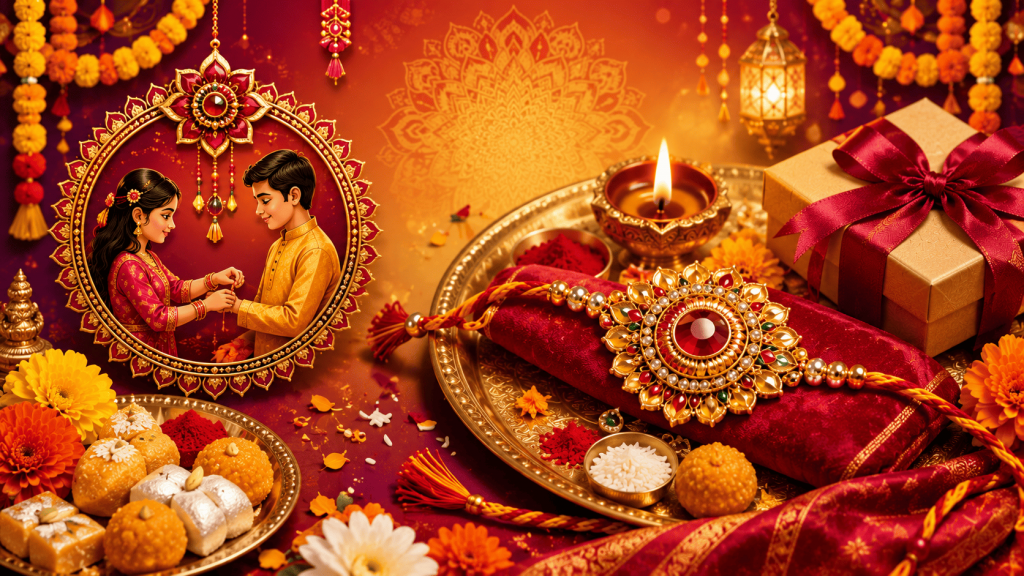
Raksha Bandhan 2026: Date, History, Significance, Rituals, Puja Vidhi & Celebration Guide
13 July 2026 by admin

Raksha Bandhan 2026: Date, History, Significance, Rituals, Puja Vidhi & Celebration Guide
Table of Contents
- Raksha Bandhan 2026 Date
- What is Raksha Bandhan?
- Meaning of Raksha Bandhan
- Why is Raksha Bandhan Celebrated?
- History of Raksha Bandhan
- Stories Associated with Raksha Bandhan
- Spiritual Significance
- Cultural Importance
- Raksha Bandhan 2026 Rituals
- Complete Puja Vidhi
- Raksha Bandhan Mantras
- Traditional Foods
- Regional Celebrations
- Modern-Day Celebrations
- Eco-Friendly Raksha Bandhan
- Dos and Don’ts
- FAQs
- Conclusion
Raksha Bandhan 2026
Raksha Bandhan is one of the most cherished festivals in Hindu culture, celebrated to honor the sacred bond between brothers and sisters. More than just the tradition of tying a Rakhi, the festival reflects love, trust, gratitude, responsibility, and lifelong protection. It reminds families that relationships thrive not merely through blood ties but through mutual respect, care, and unwavering support.
Every year, millions of families across India and around the world celebrate Raksha Bandhan with devotion and joy. Sisters prepare beautifully decorated Puja Thalis, tie a Rakhi on their brothers’ wrists, apply Tilak, perform Aarti, and pray for their brothers’ happiness, prosperity, and long life. In return, brothers promise to protect their sisters and express their affection through thoughtful gifts and heartfelt blessings.
Over time, Raksha Bandhan has grown beyond the traditional brother-sister relationship. Today, Rakhi is tied between cousins, close friends, mentors, spiritual guides, and even soldiers, symbolizing trust, gratitude, and protection. The festival also reflects the broader Hindu philosophy of Dharma, encouraging individuals to uphold their duties toward family and society.
Rooted in ancient scriptures and enriched by stories from the Mahabharata, Puranas, and Indian history, Raksha Bandhan continues to inspire people across generations. Whether celebrated in a village with simple rituals or in a modern city with digital greetings and online gift exchanges, its message remains timeless: true relationships are built on love, sacrifice, and responsibility.
In this comprehensive guide, you’ll discover everything about Raksha Bandhan 2026, including its date, history, significance, rituals, Puja Vidhi, traditional foods, regional customs, modern celebrations, and practical tips for observing the festival with devotion and joy.
Raksha Bandhan 2026 Date
In 2026, Raksha Bandhan will be celebrated on Friday, August 28, 2026. The festival falls on the Purnima (Full Moon) of the Shravana month, one of the most spiritually significant months in the Hindu calendar.
The Full Moon of Shravana or Sawan Month is considered especially auspicious because it is associated with devotion, family harmony, and divine blessings. On this day, families gather to perform traditional rituals, offer prayers, exchange sweets and gifts, and reaffirm the sacred bond between siblings.
One important aspect of Raksha Bandhan is the timing of the Rakhi ceremony. According to Hindu tradition, the Rakhi should not be tied during Bhadra Kaal, a period considered inauspicious for auspicious ceremonies. Devotees are advised to consult their local Panchang or temple calendar for the exact Muhurat based on their location.
Raksha Bandhan 2026 at a Glance
| Occasion | Details |
|---|---|
| Festival | Raksha Bandhan 2026 |
| Date | Friday, August 28, 2026 |
| Hindu Month | Shravana |
| Tithi | Purnima (Full Moon) |
| Main Ritual | Rakhi Tying Ceremony |
| Celebrated Across | India and Worldwide |
What is Raksha Bandhan?
The term Raksha Bandhan comes from two Sanskrit words:
- Raksha means protection.
- Bandhan means bond or tie.
Together, they signify the Sacred Bond of Protection.
The Rakhi, a colorful thread often decorated with beads, stones, or traditional motifs, serves as a physical symbol of this bond. While simple in appearance, it carries deep emotional and spiritual meaning.
The festival encourages siblings to appreciate one another and reinforces values such as loyalty, compassion, gratitude, and family unity. It also highlights the Hindu belief that every meaningful relationship carries duties and responsibilities that should be fulfilled with sincerity.
In modern times, Raksha Bandhan is also celebrated among cousins, close friends, and members of the armed forces. Many women tie Rakhi to soldiers to express gratitude for their service in protecting the nation.
Why is Raksha Bandhan Celebrated?
Raksha Bandhan is celebrated to strengthen the emotional connection between siblings and to remind individuals of the importance of standing by one another through every phase of life.
The festival represents:
- Unconditional love.
- Mutual respect.
- Lifelong responsibility.
- Protection from harm.
- Family unity.
- Gratitude and blessings.
- Emotional support.
- Faith and trust.
The Rakhi is not viewed as a magical thread but as a sacred reminder of the promises shared between loved ones. It inspires brothers to protect and support their sisters while encouraging sisters to pray for their brothers’ well-being and success.

History of Raksha Bandhan
The origins of Raksha Bandhan can be traced to Hindu scriptures, ancient legends, and historical traditions. While the form of celebration has evolved over centuries, its underlying values of love and protection have remained unchanged.
Several fascinating stories explain the significance of this festival.
1. Lord Krishna and Draupadi
One of the most beloved stories comes from the Mahabharata.
During an incident involving the Sudarshan Chakra, Lord Krishna accidentally injured his finger. As blood flowed from the wound, Draupadi immediately tore a strip from the edge of her saree and wrapped it around Krishna’s finger to stop the bleeding.
Krishna was deeply moved by this spontaneous act of kindness and affection. He promised that he would always protect Draupadi whenever she needed him.
Years later, during the infamous game of dice in the Kaurava court, Draupadi was publicly humiliated and an attempt was made to disrobe her. In her moment of despair, she prayed to Lord Krishna. According to the Mahabharata, Krishna miraculously protected her honor by providing an endless stream of cloth, preventing her humiliation.
This story beautifully illustrates that Raksha Bandhan is not merely about a ceremonial thread—it is about selfless love, compassion, and the sacred promise to stand by one another in times of need.
2. Goddess Lakshmi and King Bali
Another important legend is found in the Bhagavata Purana.
King Mahabali, renowned for his generosity and devotion, was granted a boon by Lord Vishnu, who agreed to remain in his kingdom. While this fulfilled Bali’s wish, it meant that Vishnu stayed away from Vaikuntha, causing Goddess Lakshmi to long for his return.
To resolve this, Lakshmi visited King Bali disguised as an ordinary woman. She tied a sacred thread around his wrist and accepted him as her brother. Touched by her gesture, Bali asked what she desired in return. Lakshmi revealed her true identity and requested that Lord Vishnu be allowed to return with her.
Honoring the sacred bond created through the Rakhi, King Bali willingly granted her request. This story highlights that Raksha Bandhan is a celebration of trust, affection, and chosen relationships, extending beyond biological ties.
Lord Indra and Indrani
Another well-known story linked to Raksha Bandhan appears in the Bhavishya Purana.
A fierce battle took place between the Devas and the Asuras. The Asuras gained strength and began to overpower the Devas. Lord Indra worried about the safety of his kingdom and sought guidance from his guru, Brihaspati.
Indrani, the wife of Lord Indra, prepared a sacred thread after chanting Vedic mantras. She tied the thread around Indra’s wrist and prayed for his strength, courage, and victory.
Lord Indra returned to the battlefield with renewed confidence. He defeated the Asuras and restored peace in heaven.
This story explains the importance of the Raksha Sutra, a sacred thread that represents divine blessings and protection. Even today, Hindu priests tie a Raksha Sutra during many religious ceremonies. The thread reminds devotees to stay connected with faith, righteousness, and devotion.
Yama and Yamuna
The story of Yama and Yamuna adds another beautiful meaning to Raksha Bandhan.
Yamuna, the goddess of the sacred river, loved her brother Yama very much. Due to his duties as the god of death, Yama could not visit her often. Many years passed before he finally reached her home.
Yamuna welcomed him with great joy. She prepared delicious food, applied Tilak on his forehead, performed Aarti, and tied a sacred thread around his wrist. She prayed for his happiness and well-being.
Yama felt touched by her love and offered her a boon. Yamuna wished that every brother who visited his sister on this day and accepted her Rakhi with love would receive blessings for a long and prosperous life.
Yama granted her wish. Since then, many people have connected Raksha Bandhan with prayers for longevity, good health, and family happiness.
Rani Karnavati and Emperor Humayun
Raksha Bandhan also appears in Indian history.
Rani Karnavati ruled the kingdom of Mewar during a difficult period. Her kingdom faced a serious threat from Bahadur Shah of Gujarat. She needed support to protect her people.
According to popular tradition, she sent a Rakhi to Mughal Emperor Humayun and asked for his help. Humayun accepted the Rakhi as a symbol of trust and prepared to defend her kingdom.
Historians continue to debate some details of this story. Even so, it remains one of the most popular examples of Raksha Bandhan. The story reflects the power of respect, trust, and human values. It shows that a sacred bond can rise above differences in religion, politics, or social status.
Other Traditions Linked to Raksha Bandhan
Raksha Bandhan has inspired many traditions across India over the centuries.
In several communities, priests tie a Raksha Sutra around the wrists of devotees during religious ceremonies. Families also tie protective threads around sacred trees, temples, and even farming tools while praying for prosperity and safety.
Many women tie Rakhi to soldiers and police officers to express gratitude for their service. Schools and social organizations often celebrate Raksha Bandhan by promoting unity, kindness, and mutual respect.
These traditions show that the festival stands for protection in its widest sense. It encourages people to care for family, society, nature, and the nation.
Significance of Raksha Bandhan
Raksha Bandhan carries deep emotional, cultural, and spiritual meaning. The festival reminds people that every relationship needs care, honesty, and responsibility.
The Rakhi may look like a simple thread, but it represents values that stay with us throughout life.
A Symbol of Love
The festival celebrates unconditional love between siblings. A Rakhi expresses affection without the need for expensive gifts or grand celebrations. The simple act of tying a thread often creates lifelong memories.
A Promise of Protection
Protection forms the heart of Raksha Bandhan.
Many people think only brothers protect sisters. Hindu tradition offers a broader message. Every family member should support, respect, and protect one another. Protection includes emotional support, guidance, encouragement, and standing together during difficult times.
A Celebration of Family
Modern life keeps many families busy. Work, education, and travel often separate loved ones for long periods.
Raksha Bandhan brings families together. It creates time for conversations, prayers, shared meals, and laughter. These moments strengthen relationships and help preserve family traditions.
A Lesson in Responsibility
Raksha Bandhan teaches that every relationship comes with responsibility.
A promise should lead to action. Brothers should support their sisters whenever needed. Sisters should continue to encourage and pray for their brothers throughout life.
This mutual care creates stronger families and healthier communities.
A Festival of Gratitude
The festival also reminds people to express gratitude.
Many brothers thank their sisters for their love, prayers, and encouragement. Sisters appreciate the care and support they receive from their brothers.
Simple words of gratitude often strengthen relationships more than expensive presents.
Spiritual Meaning of Raksha Bandhan
Raksha Bandhan carries a message that extends beyond family relationships.
The sacred thread reminds devotees to protect truth, kindness, compassion, and righteousness in daily life.
Hindu philosophy teaches that every person has a duty toward family, society, and Dharma. Raksha Bandhan encourages people to fulfill these responsibilities with honesty and devotion.
Many spiritual teachers explain that the strongest protection comes from good character, faith, and selfless actions.
The festival inspires people to:
- Practice kindness.
- Speak the truth.
- Respect elders.
- Care for younger family members.
- Help those in need.
- Live with compassion.
- Protect nature.
- Strengthen family bonds.
These values remain meaningful in every stage of life.
Importance of Raksha Bandhan in Modern Society
Raksha Bandhan continues to inspire people in today’s fast-changing world.
Families now live across different cities and countries. Technology helps siblings stay connected through video calls, online gifts, and virtual celebrations. Distance may separate families, but the emotions behind the festival remain unchanged.
The festival also encourages equality and mutual respect.
Many sisters now tie Rakhi to sisters, friends, cousins, mentors, and colleagues. Some brothers also tie Rakhi to sisters as a sign of mutual care. These changing traditions reflect the deeper meaning of Raksha Bandhan rather than limiting it to one custom.
Many schools celebrate Raksha Bandhan by teaching children about kindness and responsibility. Charitable organizations organize Rakhi events at orphanages, old-age homes, and hospitals. Volunteers distribute sweets and spend time with people who may not have family nearby.
These celebrations remind us that love grows when we share it with others.
Symbolism of the Rakhi
Every item used during Raksha Bandhan has its own meaning.
- Rakhi represents love, trust, and lifelong support.
- Tilak symbolizes blessings and positive energy.
- Rice grains (Akshat) represent prosperity and completeness.
- Diya stands for knowledge and hope.
- Sweets express happiness and goodwill.
- Flowers symbolize purity and devotion.
- Coconut represents sincerity and good fortune.
- Aarti seeks divine blessings for the entire family.
Together, these elements transform a simple family tradition into a meaningful spiritual celebration.

Raksha Bandhan Rituals
Raksha Bandhan is not just about tying a Rakhi. Every ritual has a purpose and reflects the values of love, gratitude, and family unity. Most families begin the day with a bath, wear traditional clothes, and clean the home before the ceremony.
The rituals may differ from one region to another, but the core tradition remains the same.
Common Raksha Bandhan Rituals
- Wake up early and take a holy bath.
- Wear clean or traditional clothes.
- Clean the home and the Puja area.
- Decorate the Puja Thali.
- Light a diya and incense sticks.
- Pray to Lord Ganesha and the family deity.
- Apply Tilak to the brother’s forehead.
- Perform Aarti.
- Tie the Rakhi on the right wrist.
- Offer sweets.
- Exchange gifts.
- Seek blessings from parents and elders.
- Enjoy a festive meal together.
These simple rituals create a joyful atmosphere and strengthen family relationships.
Puja Samagri for Raksha Bandhan
Prepare all the required items before the ceremony begins.
Essential Puja Items
- Rakhi
- Roli or Kumkum
- Akshat (unbroken rice grains)
- Diya
- Ghee or oil
- Cotton wicks
- Incense sticks (Agarbatti)
- Flowers
- Sweets
- Coconut
- Kalash filled with water (optional)
- Sandalwood paste (optional)
- Betel leaves and betel nuts (optional)
A neatly arranged Puja Thali adds beauty and devotion to the ceremony.
Step-by-Step Raksha Bandhan Puja Vidhi
Following the Puja Vidhi with devotion makes the celebration more meaningful.
Step 1: Prepare the Puja Area
Choose a clean and peaceful place in your home. Place the idols or images of Lord Ganesha and your family deity on a decorated platform.
Arrange all the Puja items neatly on the Thali.
Step 2: Light the Diya
Light the diya and incense sticks.
Offer your prayers to Lord Ganesha. Ask for wisdom, peace, and blessings for the entire family.
Many families also chant a short Ganesha mantra before starting the Rakhi ceremony.
Step 3: Apply Tilak
Ask your brother to sit facing east or north if possible.
Apply a Tilak of Kumkum or Roli on his forehead.
Place a few grains of Akshat over the Tilak.
The Tilak represents blessings, success, and positive energy.
Step 4: Perform Aarti
Hold the decorated Puja Thali and rotate it clockwise in front of your brother.
Pray for his health, happiness, wisdom, and prosperity.
Many families sing traditional Aarti during this ritual.
Step 5: Tie the Rakhi
Tie the Rakhi gently on your brother’s right wrist.
Take a moment to pray silently for his long life, good health, and success.
This is the most important part of the festival.
Step 6: Chant the Raksha Mantra
Many families recite a traditional Sanskrit mantra while tying the Rakhi.
Raksha Bandhan Mantra
येन बद्धो बलिराजा दानवेन्द्रो महाबलः।
तेन त्वामभिबध्नामि रक्षे मा चल मा चल॥
Transliteration
Yena Baddho Bali Raja Danavendro Mahabalah
Tena Tvam Abhibadhnami Rakshe Ma Chala Ma Chala.
Meaning
“I tie this sacred thread that once protected the mighty King Bali. May it protect you always and remain firm.”
This mantra reminds us that the Rakhi represents blessings, faith, and protection.
Step 7: Offer Sweets
Feed your brother sweets after tying the Rakhi.
Popular choices include:
- Laddu
- Barfi
- Kaju Katli
- Peda
- Rasgulla
- Gulab Jamun
The exchange of sweets symbolizes happiness and goodwill.
Step 8: Exchange Gifts
Brothers express their love through thoughtful gifts.
The gift does not have to be expensive. A meaningful present, a handwritten letter, or even spending quality time together can make the day special.
Step 9: Seek Blessings
Touch the feet of parents and elders.
Their blessings complete the ceremony and add spiritual significance to the celebration.
Why Is Rakhi Tied on the Right Wrist?
The right hand holds special importance in Hindu traditions.
People use the right hand for many religious rituals because it symbolizes positive action and commitment. Tying the Rakhi on the right wrist reflects a promise to uphold love, respect, and responsibility.
The sacred thread also serves as a reminder to follow the path of Dharma.
What Happens After the Rakhi Ceremony?
The celebration continues even after the rituals end.
Families gather for lunch or dinner. Children play together, relatives visit each other, and everyone enjoys festive dishes. Many siblings spend time sharing old memories and taking photographs.
Those who live far from home often celebrate through video calls. Online gift deliveries and digital greetings help families stay connected across different cities and countries.
The emotions remain the same, no matter the distance.
Traditional Foods Prepared on Raksha Bandhan
No Indian festival feels complete without delicious food.
Every region prepares special dishes to mark the occasion. Many families cook traditional recipes that have been passed down through generations.
Popular Sweets
- Kaju Katli
- Besan Laddu
- Motichoor Laddu
- Peda
- Barfi
- Rasgulla
- Gulab Jamun
- Soan Papdi
Popular Main Course Dishes
- Puri
- Aloo Sabzi
- Chole
- Paneer Butter Masala
- Shahi Paneer
- Jeera Rice
- Dal Makhani
- Vegetable Pulao
Festive Desserts
- Kheer
- Seviyan
- Phirni
- Rabri
- Halwa
- Shrikhand
Many families also prepare homemade snacks such as samosas, kachoris, pakoras, and dahi bhalla to serve guests.
Gift Ideas for Raksha Bandhan 2026
Choosing a thoughtful gift makes the festival even more memorable.
Gift Ideas for Brothers
- Smartwatch
- Wallet
- Books
- Fitness accessories
- Grooming kit
- Personalized mug
- Spiritual books
- Handmade gifts
Gift Ideas for Sisters
- Jewelry
- Saree or ethnic wear
- Handbag
- Perfume
- Plants
- Customized photo frame
- Gift hamper
- Wellness products
The value of a gift lies in the thought behind it rather than its price.

Regional Celebrations of Raksha Bandhan in India
India celebrates Raksha Bandhan with great enthusiasm. Every region follows its own customs while preserving the festival’s core values of love, respect, and family unity.
North India
North India hosts some of the grandest Raksha Bandhan celebrations. Families gather at their ancestral homes, sisters perform the Rakhi ceremony, and everyone enjoys traditional sweets and festive meals.
Markets come alive with colorful Rakhis, gift hampers, and decorative Puja items several weeks before the festival. Many families also visit temples to seek blessings from Lord Shiva, Lord Vishnu, Lord Ganesha, and Goddess Lakshmi.
Rajasthan
In Rajasthan, women often tie Lumba Rakhi to their sisters-in-law along with the traditional Rakhi for their brothers.
A Lumba Rakhi hangs from the bride’s bangles and symbolizes prosperity, unity, and happiness within the family. This tradition recognizes that both husband and wife contribute equally to family relationships.
Gujarat
Raksha Bandhan in Gujarat often coincides with the sacred observance of Pavitropana, a festival dedicated to Lord Shiva.
Many devotees visit Shiva temples before celebrating Raksha Bandhan at home. Families perform special prayers and seek blessings for peace, health, and prosperity.
Maharashtra
Many Maharashtrian families celebrate Narali Purnima on the same day as Raksha Bandhan.
Fishing communities offer coconuts to the sea and pray for safety before beginning a new fishing season. Families then return home to celebrate Raksha Bandhan with traditional rituals and festive meals.
West Bengal
People in West Bengal celebrate Raksha Bandhan as a festival of harmony and social unity.
Many schools, colleges, and community organizations organize Rakhi ceremonies to promote friendship and brotherhood. This tradition gained wider recognition through the efforts of Nobel laureate Rabindranath Tagore, who encouraged people to use Raksha Bandhan as a symbol of unity during challenging times.
South India
Although Raksha Bandhan is more prominent in northern and western India, many families across South India also celebrate the festival.
Priests often tie a sacred protective thread known as Raksha or Raksha Sutra on devotees after completing religious ceremonies. Families exchange gifts, prepare festive meals, and spend quality time together.
Raksha Bandhan Around the World
Indian communities across the globe celebrate Raksha Bandhan with the same devotion and enthusiasm.
Families living in countries such as the United States, Canada, the United Kingdom, Australia, Singapore, New Zealand, and the United Arab Emirates organize Rakhi celebrations at home, in temples, and at community centers.
Many siblings who live in different countries send Rakhi through courier services or online shopping platforms. Video calls allow families to celebrate together despite the distance.
These modern methods help preserve traditions while adapting to today’s lifestyle.
Modern Ways to Celebrate Raksha Bandhan
Today’s celebrations combine tradition with creativity.
Many families choose thoughtful experiences instead of expensive gifts.
Popular ideas include:
- Writing a heartfelt letter.
- Creating a handmade Rakhi.
- Preparing a favorite meal together.
- Visiting a temple as a family.
- Planting a tree together.
- Donating to a charitable organization.
- Supporting local artisans by purchasing handmade Rakhis.
- Organizing a family photo session.
- Recording family memories through videos.
Simple gestures often leave lasting memories.
Eco-Friendly Raksha Bandhan
Many decorative Rakhis contain plastic, foam, glitter, or non-biodegradable materials. These products create unnecessary waste after the festival.
An eco-friendly celebration helps protect the environment while honoring Hindu values that respect nature.
Ways to Celebrate Sustainably
- Buy handmade cotton or silk Rakhis.
- Choose seed Rakhis that grow into plants.
- Avoid plastic decorations.
- Decorate your home with flowers and reusable items.
- Use clay diyas instead of disposable lights.
- Purchase sweets from local businesses.
- Recycle gift wrapping whenever possible.
- Carry cloth bags while shopping.
- Avoid excessive packaging.
These small choices reduce waste and encourage responsible celebrations.
Dos and Don’ts of Raksha Bandhan
Following a few simple practices helps maintain the spiritual significance of the festival.
Dos
- Wake up early and take a bath before the ceremony.
- Wear clean or traditional clothes.
- Prepare the Puja Thali carefully.
- Pray with devotion.
- Tie the Rakhi during the appropriate Muhurat.
- Respect family traditions.
- Exchange blessings with elders.
- Celebrate with kindness and gratitude.
- Spend quality time with family members.
- Support local artisans by purchasing handmade Rakhis.
Don’ts
- Avoid tying the Rakhi during Bhadra Kaal.
- Do not rush through the rituals.
- Avoid arguments on the festival day.
- Do not waste food.
- Avoid plastic decorations whenever possible.
- Do not ignore elderly family members during the celebration.
- Avoid purchasing Rakhis made from harmful materials.
- Do not treat the festival as only a gift exchange.
Frequently Asked Questions (FAQs)
1. When is Raksha Bandhan in 2026?
Raksha Bandhan will be celebrated on Friday, August 28, 2026.
2. Why do sisters tie Rakhi?
Sisters tie Rakhi to pray for their brothers’ health, happiness, and prosperity. The Rakhi also symbolizes love, trust, and lifelong support.
3. Which hand should the Rakhi be tied on?
Traditionally, the Rakhi is tied on the right wrist.
4. Why should Bhadra Kaal be avoided?
Many Hindu scriptures consider Bhadra Kaal unsuitable for auspicious ceremonies. Families usually perform the Rakhi ceremony after this period ends.
5. Can sisters tie Rakhi to cousins?
Yes. Many families tie Rakhi to cousins and other close relatives.
6. Can women tie Rakhi to soldiers?
Yes. Many women tie Rakhi to members of the armed forces as a gesture of gratitude and respect for their service.
7. Is Raksha Bandhan celebrated outside India?
Yes. Indian communities around the world celebrate the festival with traditional rituals and family gatherings.
8. What is the meaning of Rakhi?
The Rakhi symbolizes love, protection, trust, blessings, and responsibility.
9. What should a Puja Thali contain?
A traditional Puja Thali includes Rakhi, Kumkum, Akshat, Diya, flowers, sweets, incense sticks, and other worship items.
10. What gifts are suitable for Raksha Bandhan?
Books, clothing, jewelry, plants, personalized gifts, handmade items, and spiritual books all make thoughtful gifts.
11. Can Raksha Bandhan celebrate relationships beyond siblings?
Yes. Many people tie Rakhi to friends, mentors, cousins, and individuals they deeply respect. The festival celebrates trust, affection, and responsibility in many forms of relationships.
12. What message does Raksha Bandhan give?
Raksha Bandhan encourages people to value family, strengthen relationships, protect one another, and live with kindness and compassion.
Conclusion
Raksha Bandhan is much more than a festival centered on a sacred thread. It celebrates love, trust, respect, and lifelong commitment between siblings and families. Every ritual, prayer, and blessing reminds us that meaningful relationships grow through care, understanding, and shared responsibilities.
The stories associated with Raksha Bandhan continue to inspire people across generations. The legends of Lord Krishna and Draupadi, Goddess Lakshmi and King Bali, Lord Indra and Indrani, and Yama and Yamuna highlight timeless values such as devotion, sacrifice, gratitude, and protection. These teachings remain relevant even in today’s fast-paced world.
As families gather on Friday, August 28, 2026, they carry forward a tradition that has united generations for centuries. Whether the celebration takes place in a village, a city, or across continents through a video call, the spirit of Raksha Bandhan remains unchanged.
Celebrate this auspicious festival with devotion, cherish every moment with your loved ones, and remember that the strongest bonds are built through love, trust, respect, and compassion.
May Raksha Bandhan 2026 bring peace, happiness, good health, and lasting prosperity to you and your family.
Happy Raksha Bandhan! 🌸🙏