
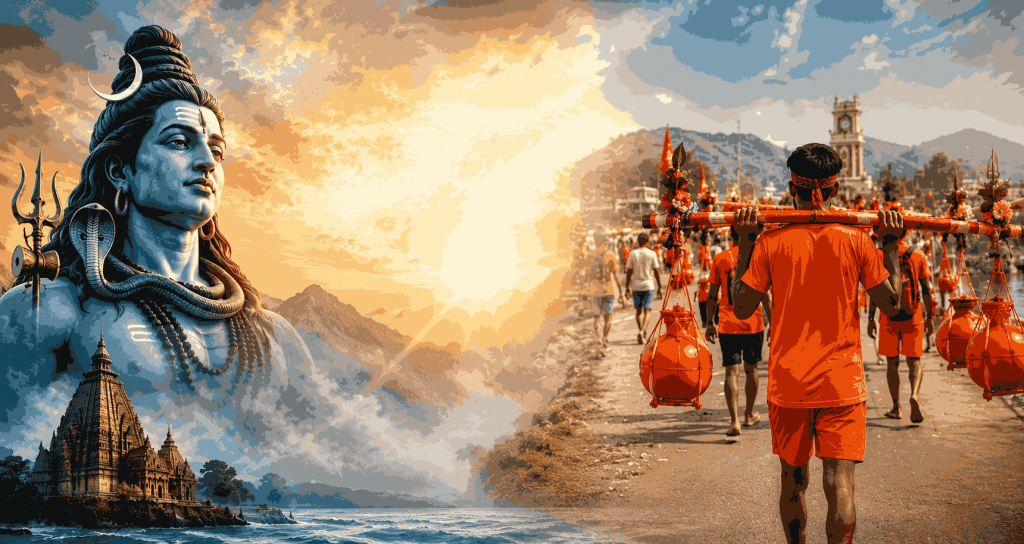
Kanwar Yatra 2026: History, Significance, Rituals, Rules & Complete Guide for Devotees
27 June 2026 by admin

Kanwar Yatra 2026: History, Significance, Rituals & Complete Guide
Every year during the holy month of Shravan (Sawan), millions of devotees of Lord Shiva embark on one of India’s largest spiritual pilgrimages known as the Kanwar Yatra. The Kanwar Yatra 2026 is expected to witness crores of Shiva devotees, popularly known as Kanwariyas, traveling hundreds of kilometers on foot to collect sacred Ganga Jal (Holy Ganges Water) and offer it to Lord Shiva in temples across India.
More than just a religious procession, Kanwar Yatra symbolizes devotion, discipline, faith, sacrifice, and unwavering dedication towards Mahadev. From chanting “Bol Bam” to walking barefoot for days, every aspect of this sacred journey carries deep spiritual meaning.
In this complete guide, we’ll explore the history of Kanwar Yatra, its spiritual significance, rituals, rules, types of Kanwar, and everything devotees should know before participating in Kanwar Yatra 2026.
What is Kanwar Yatra?
Kanwar Yatra is an annual Hindu pilgrimage during the month of Shravan, where devotees carry holy water from the River Ganga in a decorated bamboo structure called a Kanwar. This sacred water is then offered to the Shivling in temples dedicated to Lord Shiva.
The word Kanwar refers to the bamboo pole balanced across the shoulders, with water pots hanging on both ends. Devotees believe that offering Ganga Jal to Lord Shiva during Sawan brings divine blessings, removes negative karma, fulfills wishes, and grants spiritual peace.
Today, Kanwar Yatra is considered one of the world’s largest annual religious pilgrimages.
History of Kanwar Yatra
The history of Kanwar Yatra dates back thousands of years and is deeply rooted in Hindu mythology.
According to one popular legend, during the Samudra Manthan (Churning of the Ocean), a deadly poison called Halahala emerged. To save the universe, Lord Shiva consumed the poison, which turned his throat blue, earning him the name Neelkanth.
To reduce the burning effect of the poison, the gods offered sacred Ganga Jal to Lord Shiva. This act of devotion is believed to have inspired the tradition of carrying holy Ganga water and offering it to Mahadev.
Another legend connects Kanwar Yatra with Lord Parashurama, who is believed to have carried holy Ganga water to perform Jalabhishek on a Shivling in ancient times.
Over centuries, this tradition evolved into the massive spiritual pilgrimage we witness today.
Spiritual Significance of Kanwar Yatra
The significance of Kanwar Yatra goes beyond merely carrying holy water.
It represents:
- Absolute devotion towards Lord Shiva
- Purification of the mind and soul
- Self-discipline and patience
- Dedication and sacrifice
- Gratitude towards nature and the sacred River Ganga
Walking long distances while chanting “Bol Bam”, “Har Har Mahadev”, and “Bam Bam Bhole” is considered a form of meditation that strengthens one’s spiritual connection with Lord Shiva.
Many devotees observe fasting throughout the pilgrimage and avoid material comforts as a mark of devotion.
Why Do Devotees Carry Ganga Jal?
One of the most common questions is:
Why do devotees carry Ganga Jal during Kanwar Yatra?
According to Hindu beliefs, the River Ganga is considered the holiest river, capable of washing away sins and purifying the soul.
Offering Ganga Jal to Lord Shiva during Shravan is believed to:
- Fulfill wishes
- Remove obstacles from life
- Bring prosperity
- Improve health
- Bless families with peace and happiness
- Help attain spiritual liberation (Moksha)
Major Routes of Kanwar Yatra
During Kanwar Yatra 2026, devotees collect holy water from several sacred locations including:
- Haridwar
- Gaumukh
- Gangotri
- Rishikesh
- Sultanganj (Bihar)
From these holy places, Kanwariyas travel to their hometowns or nearby Shiva temples to perform Jalabhishek.
Some famous temples include:
- Baidyanath Dham
- Neelkanth Mahadev Temple
- Kashi Vishwanath
- Pura Mahadev
- Baba Garib Nath Temple
Types of Kanwar Yatra
There are different forms of Kanwar Yatra, each requiring different levels of dedication.
1. Samanya Kanwar
Devotees walk comfortably while carrying the Kanwar and may take regular breaks.
2. Dak Kanwar
This is one of the most challenging forms where devotees continuously run without stopping until they reach the temple.
3. Khadi Kanwar
In this tradition, the Kanwar is never placed on the ground. Fellow devotees help support it during breaks.
Important Rituals of Kanwar Yatra
The Kanwar Yatra rituals include:
- Taking a holy bath in the River Ganga
- Filling pots with sacred Ganga Jal
- Decorating the Kanwar
- Walking barefoot
- Chanting Shiva mantras
- Maintaining purity and discipline
- Offering Jalabhishek on the Shivling
- Performing prayers and seeking Lord Shiva’s blessings
Many devotees wear saffron-colored clothes, symbolizing sacrifice and devotion.
Rules Every Kanwariya Should Follow
For a successful and spiritually rewarding Kanwar Yatra 2026, devotees should follow these traditional rules:
- Maintain cleanliness and personal hygiene.
- Avoid alcohol, tobacco, and non-vegetarian food.
- Speak respectfully with everyone.
- Never place the Kanwar directly on the ground.
- Maintain discipline during the journey.
- Respect fellow pilgrims.
- Avoid unnecessary arguments.
- Follow local administration and traffic guidelines.
- Stay hydrated and carry essential medical supplies.
These practices enhance both the spiritual and physical aspects of the pilgrimage.
Health & Safety Tips for Kanwar Yatra 2026
Since many devotees walk long distances, preparation is essential.
- Wear comfortable footwear if permitted by your tradition.
- Drink plenty of water.
- Carry ORS and first-aid supplies.
- Protect yourself from heat and rain.
- Eat light, nutritious meals.
- Walk in groups whenever possible.
- Follow official travel advisories and designated Kanwar routes.
Proper planning ensures a safer and more fulfilling pilgrimage experience.
Why Kanwar Yatra is More Than a Pilgrimage
The Kanwar Yatra is not just about reaching a temple—it’s about the journey itself. Every step taken by a Kanwariya symbolizes faith, perseverance, humility, and surrender to Lord Shiva. Along the route, communities come together to serve pilgrims by offering food, water, medical aid, and resting camps, reflecting the spirit of seva (selfless service) that is central to Indian culture.
The chants of “Bol Bam”, “Har Har Mahadev”, and “Bam Bam Bhole” create an atmosphere of unity and devotion that inspires millions each year.
Conclusion
The Kanwar Yatra 2026 is one of the most sacred and inspiring religious journeys in India. Rooted in ancient traditions and rich mythology, it represents unwavering devotion to Lord Shiva, the sanctity of the River Ganga, and the timeless values of faith, discipline, and selfless service.
Whether you are participating in the pilgrimage or simply seeking to understand its significance, Kanwar Yatra offers a profound glimpse into India’s spiritual heritage. As millions of devotees carry Ganga Jal with chants of “Bol Bam” and “Har Har Mahadev”, the yatra continues to strengthen the bond between devotees and Mahadev while preserving one of the country’s most cherished traditions.
May Lord Shiva bless all devotees with strength, peace, prosperity, and divine grace.
Har Har Mahadev! 🔱