
Madhyamaheshwar Yatra Travel Guide: History, Mythology, Trek Route, Distance, Stay, Weather & Darshan
29 July 2026 by admin

Madhyamaheshwar Yatra Travel Guide: History, Mythology, Trek Route, Distance, Stay, Weather & Darshan
Table of Contents
- Quick Travel Guide for Madhyamaheshwar Yatra
- Overview of Madhyamaheshwar Yatra
- Why is Madhyamaheshwar Famous?
- History of Madhyamaheshwar Temple
- Mythology & Connection with the Mahabharata
- Why is it Called Madhyamaheshwar?
- Madhyamaheshwar as the Fourth Kedar
- Temple Architecture
- Idol & Deity Worshipped
- Daily Aarti & Darshan Timings
- Best Time to Visit
- Weather Throughout the Year
- How to Reach Madhyamaheshwar
- Trek Route Explained
- Detailed Trek Itinerary
- Accommodation (Hotels, GMVN & Homestays)
- Food Availability
- Mobile Network & ATM Facilities
- Packing List
- Things to Know Before Trekking
- Budha Madhyamaheshwar Trek
- Nearby Attractions
- Festivals Celebrated
- Photography Tips
- Responsible Tourism
- Frequently Asked Questions
- Final Thoughts
Madhyamaheshwar Yatra Travel Guide 2026
Nestled at an altitude of approximately 3,289 metres (10,790 feet) in the Garhwal Himalayas of Uttarakhand, Madhyamaheshwar Yatra is one of the most sacred temples dedicated to Lord Shiva. It is revered as the Fourth temple among the Panch Kedar, attracting thousands of pilgrims and trekking enthusiasts every year. Surrounded by lush alpine meadows, snow-clad Himalayan peaks, and peaceful forests, this temple offers a perfect blend of spirituality and adventure.
Unlike many famous pilgrimage destinations that are accessible by road, Madhyamaheshwar requires devotees to complete a scenic Himalayan trek. The journey itself becomes a spiritual experience as travellers walk through picturesque villages, dense oak and rhododendron forests, crystal-clear streams, and breathtaking mountain landscapes.
According to Hindu mythology, this temple marks the place where the middle (navel) portion of Lord Shiva appeared before the Pandavas after the Mahabharata war. This divine event forms the foundation of the Panch Kedar legend, making Madhyamaheshwar one of the holiest Shiva shrines in India.
Whether you are planning your Panch Kedar Yatra, looking for an unforgettable Himalayan trek, or seeking spiritual peace amidst nature, this guide covers everything you need to know for your Madhyamaheshwar Yatra 2026.
Quick Travel Guide
| Information | Details |
|---|---|
| State | Uttarakhand |
| District | Rudraprayag |
| Elevation | 3,289 metres |
| Temple Dedicated To | Lord Shiva |
| Panch Kedar | Fourth Kedar |
| Trek Starts From | Ransi Village |
| Trek Distance | Around 16–18 km (one way) |
| Nearest Railway Station | Rishikesh |
| Nearest Airport | Jolly Grant Airport, Dehradun |
| Best Time | May–June & September–October |
| Winter Seat | Omkareshwar Temple, Ukhimath |
| Difficulty Level | Moderate |
Overview of Madhyamaheshwar Temple
Madhyamaheshwar Temple stands in a spectacular valley surrounded by towering Himalayan peaks such as Chaukhamba, Neelkanth, Kedarnath, and Mandani. The peaceful atmosphere, fresh mountain air, and spiritual vibrations make it one of the most serene pilgrimage destinations in India.
Unlike crowded religious sites, Madhyamaheshwar Yatra remains relatively peaceful, allowing visitors to experience meditation, devotion, and nature together.
The temple opens every year around May after the winter season and closes during October or November before heavy snowfall begins.
During winter, the idol of Lord Shiva is ceremonially shifted to Omkareshwar Temple in Ukhimath, where devotees continue their worship until the temple reopens in summer.
Why is Madhyamaheshwar Famous?
Madhyamaheshwar is famous for several reasons:
- Fourth temple among the Panch Kedar.
- Connected with the Pandavas and Mahabharata.
- Lord Shiva’s navel is worshipped here.
- Beautiful Himalayan trekking route.
- Spectacular sunrise views from Budha Madhyamaheshwar.
- Rich spiritual heritage.
- Ancient stone temple architecture.
- Less crowded than Kedarnath.
- Excellent destination for meditation.
- Stunning views of Chaukhamba Peak.
The peaceful surroundings make every visitor feel spiritually connected with nature.
History of Madhyamaheshwar Yatra
The exact construction date of Madhyamaheshwar Yatra remains uncertain. However, historians believe that the temple is over 1,000 years old and follows the traditional North Indian Himalayan temple architecture.
The temple is believed to have been established by the Pandavas after the Mahabharata war. Later, it was restored and maintained by the rulers of the Garhwal Kingdom.
Over centuries, despite harsh Himalayan weather, earthquakes, and heavy snowfall, the temple has remained remarkably well preserved.
Its timeless architecture reflects the devotion and engineering skills of ancient India.
Mythology of Madhyamaheshwar Yatra
One of the most fascinating aspects of Madhyamaheshwar is its connection to the Mahabharata.
After defeating the Kauravas, the Pandavas sought forgiveness from Lord Shiva for the sins committed during the war. However, Shiva did not wish to meet them and disguised himself as a bull (Nandi).
When Bhima recognized the bull and tried to catch it, Shiva disappeared into the earth.
His body appeared at five different places:
- Kedarnath – Hump
- Madhyamaheshwar – Navel and stomach
- Tungnath – Arms
- Rudranath – Face
- Kalpeshwar – Hair
These five temples together became known as the Panch Kedar.
Pilgrims believe that completing all five temples grants divine blessings and spiritual liberation.
Why is it Called Madhyamaheshwar?
The word “Madhya” means middle, while “Maheshwar” refers to Lord Shiva.
Since the middle portion (navel and stomach) of Lord Shiva appeared here, the temple came to be known as Madhyamaheshwar.
This unique significance makes it one of the holiest Shiva temples in the Himalayas.

Temple Architecture of Madhyamaheshwar
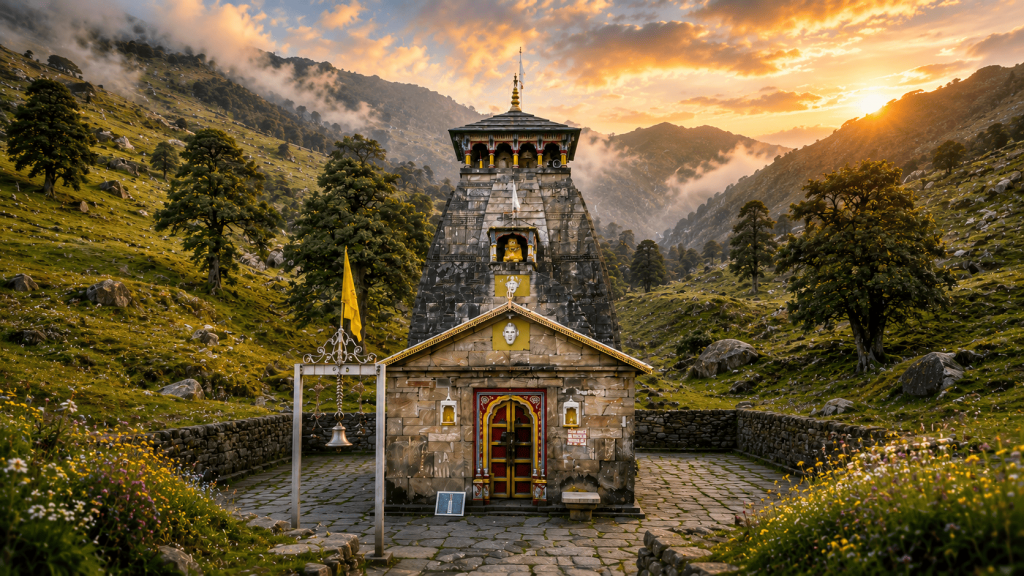
Madhyamaheshwar Temple is a fine example of ancient Himalayan stone architecture. Although smaller than Kedarnath Temple, it possesses immense spiritual significance and remarkable craftsmanship. The temple has withstood centuries of harsh weather, heavy snowfall, and earthquakes, which speaks volumes about the engineering skills of ancient builders.
The temple is constructed using large grey stone blocks carefully stacked without modern cement. Its sturdy structure blends naturally with the surrounding Himalayan landscape. The simple yet elegant design reflects the traditional architecture commonly seen in many ancient temples across Uttarakhand.
The temple complex consists of:
- Main sanctum (Garbhagriha)
- Mandapa (Prayer Hall)
- Nandi statue facing Lord Shiva
- Small shrines dedicated to various deities
- Sacred courtyard
- Prayer area for pilgrims
Unlike many modern temples, Madhyamaheshwar retains its original spiritual ambiance. The absence of excessive commercialization allows devotees to experience peace and devotion in its purest form.
The backdrop of the Chaukhamba mountain range further enhances the beauty of the temple, making it one of the most picturesque shrines in the Indian Himalayas.
The Sacred Shiva Lingam
The principal deity worshipped inside the temple is Lord Shiva in the form of a black stone Shiva Lingam.
Unlike the hump-shaped Shiva Lingam at Kedarnath, the Shiva Lingam at Madhyamaheshwar represents the middle portion (navel and stomach) of Lord Shiva.
Devotees believe this sacred Lingam symbolizes:
- Creation
- Preservation
- Cosmic energy
- Balance of life
- Inner strength
- Spiritual awakening
The temple priests perform daily rituals following ancient Vedic traditions that have been preserved for generations.
Daily Darshan Timings and Aarti
Although timings may vary slightly depending on the season and weather conditions, the temple generally follows this schedule.
| Ritual | Timing |
|---|---|
| Temple Opens | 6:00 AM |
| Morning Darshan | 6:00 AM – 12:00 PM |
| Afternoon Break | 12:00 PM – 2:00 PM |
| Evening Darshan | 2:00 PM – 7:00 PM |
| Evening Aarti | Around Sunset |
| Temple Closes | 7:00 PM |
Pilgrims are advised to arrive early in the morning for peaceful darshan, especially during May, June, and festival days when the number of visitors increases.
Best Time to Visit Madhyamaheshwar Temple
Choosing the right season can make your pilgrimage safer and more enjoyable. While the temple remains open only for a few months each year, every season offers a unique experience.
Summer (May to June)
Summer is considered the best time for Madhyamaheshwar Yatra.
Temperature
- Day: 10°C to 20°C
- Night: 2°C to 8°C
Highlights
- Pleasant weather
- Snow visible on surrounding peaks
- Comfortable trekking conditions
- Rhododendron forests in bloom
- Clear mountain views
This period is ideal for families, senior citizens with trekking experience, photographers, and first-time visitors.
Monsoon (July to August)
The monsoon season transforms the valley into a lush green paradise. However, trekking becomes more challenging due to heavy rainfall.
Conditions
- Slippery trekking trails
- Frequent landslides
- Rising water streams
- Reduced visibility
- Delays in transportation
While the landscapes appear incredibly beautiful, pilgrims should carefully monitor weather forecasts before planning their journey during this period.
Autumn (September to October)
Autumn is another excellent season for visiting Madhyamaheshwar.
Advantages include:
- Crystal-clear Himalayan views
- Stable weather
- Comfortable trekking temperatures
- Less crowded trails
- Excellent photography opportunities
Many experienced trekkers consider autumn the best season for Panch Kedar trekking.
Winter (November to April)
Heavy snowfall covers the entire region during winter, making the temple inaccessible.
The idol of Lord Shiva is shifted to Omkareshwar Temple, Ukhimath, where devotees continue worship until the reopening ceremony in summer.
Weather Guide Month by Month
| Month | Weather | Recommendation |
|---|---|---|
| May | Pleasant | Excellent |
| June | Pleasant | Excellent |
| July | Heavy Rain | Avoid if possible |
| August | Rain | Moderate Risk |
| September | Cool & Clear | Excellent |
| October | Cold | Excellent |
| November | Snow Begins | Temple Closing |
| December–April | Heavy Snowfall | Temple Closed |
How to Reach Madhyamaheshwar Temple
Although the temple lies deep within the Garhwal Himalayas, reaching it is straightforward with proper planning.
Pilgrims first travel by road to Ransi Village, which serves as the base camp for the trek.
By Air
The nearest airport is Jolly Grant Airport, Dehradun, located approximately 220–230 km from Ransi.
From the airport, visitors can hire:
- Taxi
- Shared cab
- Bus to Ukhimath
- Private vehicle
The road journey usually takes 8–10 hours depending on traffic and weather.
By Train
The nearest railway stations are:
- Rishikesh
- Haridwar
Both stations have regular train connectivity from major Indian cities.
From there, buses and taxis are available for Ukhimath and Ransi.
By Road
The road journey itself is incredibly scenic.
Typical route:
Haridwar → Rishikesh → Devprayag → Srinagar → Rudraprayag → Kund → Ukhimath → Uniana → Ransi
Road conditions are generally good until Ransi, though mountain driving requires caution.
Madhyamaheshwar Yatra/Trek Route
The trek begins from Ransi Village.
Trek Distance
Approximately 16–18 km (one way)
Difficulty
Moderate
Trek Duration
6–8 hours depending on fitness.
The route passes through:
- Dense forests
- Mountain villages
- Waterfalls
- Wooden bridges
- Alpine meadows
- Himalayan valleys
The gradual ascent allows trekkers to enjoy the journey while soaking in breathtaking views.
Trek Route Breakdown
Ransi to Gaundhar
Distance: Around 6 km
The first section descends gradually through beautiful forests before crossing streams and suspension bridges.
The village of Gaundhar offers basic tea stalls and small eateries where trekkers can rest before continuing.
Gaundhar to Bantoli
Distance: Around 2 km
This stretch follows the scenic river valley.
The sound of flowing water and surrounding forests make this one of the most relaxing parts of the trek.
Bantoli serves as an important junction where streams from Madhyamaheshwar and Markanga merge.
Several basic accommodations are available here.
Bantoli to Khatara
Distance: Around 4 km
From Bantoli, the climb becomes steeper.
The trail winds through dense oak forests and offers magnificent mountain views.
Trekkers often encounter Himalayan birds and occasional wildlife along this section.
Khatara to Madhyamaheshwar Temple
Distance: Around 4–5 km
The final stretch rewards every pilgrim with spectacular alpine meadows and panoramic Himalayan scenery.
As the temple comes into view, the peaceful surroundings and majestic backdrop create an unforgettable first impression.
Trek Difficulty
Although classified as a moderate trek, proper preparation makes the journey much easier.
Suitable for:
- Beginners with basic fitness
- Families with older children
- Experienced trekkers
- Pilgrims
- Nature enthusiasts
Not recommended for:
- Individuals with serious heart or respiratory conditions
- Those with severe knee problems
- People unaccustomed to walking on mountain trails
Regular walking, light cardio exercises, and leg-strengthening workouts for a few weeks before the trip can greatly improve your trekking experience.
Suggested Trek Itinerary
Day 1
Haridwar/Rishikesh → Ukhimath → Ransi
Day 2
Ransi → Madhyamaheshwar Temple
Attend evening aarti and stay overnight.
Day 3
Early morning trek to Budha Madhyamaheshwar Yatra, return to the temple, and descend to Ransi.
Day 4
Ransi → Rudraprayag → Haridwar or Dehradun
This itinerary allows sufficient time for darshan, photography, acclimatization, and enjoying the serene Himalayan environment without rushing the pilgrimage.

Accommodation Near Madhyamaheshwar Temple
Although Madhyamaheshwar is located in a remote Himalayan region, pilgrims can still find comfortable accommodation at different stages of the journey. Options range from budget homestays in mountain villages to government-operated guest houses. Since facilities near the temple are limited, booking your stay in advance—especially during May, June, and September—is highly recommended.
Accommodation at Ransi
Ransi is the starting point of the Madhyamaheshwar trek and the most convenient place to stay before beginning your journey.
Available Options
- Family-run homestays
- Budget guest houses
- Small lodges
- Local dharamshalas
- Camps (seasonal)
Facilities
- Clean rooms
- Attached and common bathrooms
- Home-cooked Garhwali meals
- Parking for private vehicles
- Basic medical assistance
- Electricity
- Mobile charging points
Most homestays provide a warm local experience, allowing visitors to learn about Garhwali culture and traditions.
Accommodation at Bantoli
Bantoli is a small settlement located midway along the trek. It is an excellent option for pilgrims who prefer dividing the trek into two days.
Facilities generally include:
- Basic guest houses
- Village homestays
- Shared dormitories
- Simple vegetarian meals
- Drinking water
Luxury amenities are not available here, but the peaceful riverside location offers a relaxing overnight halt.
Stay Near Madhyamaheshwar Temple
A limited number of accommodations are available close to the temple.
These include:
- GMVN Tourist Rest House (subject to availability)
- Temple guest houses
- Local lodges
- Seasonal camps
- Homestays
Rooms are simple yet sufficient for an overnight stay. Electricity may be limited, and hot water availability depends on weather conditions.
Waking up to the sight of the Chaukhamba peaks illuminated by the first rays of the sun makes staying near the temple a memorable experience.
GMVN Tourist Rest House
The Garhwal Mandal Vikas Nigam (GMVN) operates tourist rest houses across Uttarakhand, including along the Panch Kedar route.
Advantages include:
- Government-managed property
- Safe accommodation
- Clean rooms
- Advance booking facility
- Suitable for families
- Reliable service
If you plan your trip during the peak pilgrimage season, reserve your room well in advance to avoid last-minute inconvenience.
Food Availability During the Trek
The Madhyamaheshwar Yatra/trek does not have restaurants or cafés like those found in urban areas. However, pilgrims can easily find freshly prepared vegetarian food at various villages along the route.
Common food options include:
- Dal-Rice
- Rajma-Chawal
- Vegetable Curry
- Roti
- Maggi
- Poha
- Paratha
- Tea
- Coffee
- Biscuits
- Packaged snacks
Since the ingredients are transported to remote mountain villages, food prices are slightly higher than in the plains.
Most eateries prepare food fresh upon request, so expect a short waiting time.
Drinking Water
Natural mountain streams flow throughout the trekking route.
However, for safety, pilgrims should:
- Carry a reusable water bottle.
- Use water purification tablets or portable filters.
- Refill only from trusted sources.
- Avoid drinking untreated stagnant water.
Many tea stalls also provide filtered drinking water.
Mobile Network and Internet Connectivity
Network connectivity becomes weaker as you move higher into the mountains.
Generally available networks include:
- BSNL (most reliable)
- Jio (works in some locations)
- Airtel (limited connectivity)
- Vi (intermittent)
Internet speed is slow, and there may be complete signal loss near certain stretches of the trek.
Inform your family about limited connectivity before starting your journey.
ATM and Banking Facilities
ATMs are available in:
- Rudraprayag
- Ukhimath
There are no ATM facilities at Ransi or near Madhyamaheshwar Temple.
Carry sufficient cash for:
- Accommodation
- Meals
- Local transport
- Emergency expenses
- Donations
Digital payments may work in a few places, but they should not be relied upon.
Medical Facilities
Basic medical facilities are available in:
- Ukhimath
- Rudraprayag
Along the trek, only limited first-aid assistance is available.
Carry your own medical kit containing:
- Personal medicines
- Pain relievers
- Bandages
- Antiseptic cream
- ORS packets
- Motion sickness medicine
- Altitude sickness medication (consult your doctor)
- Insect repellent
- Sunscreen
- Lip balm
If you have a chronic medical condition, consult your physician before undertaking the trek.
Estimated Budget for Madhyamaheshwar Yatra
The total cost depends on your travel style, transportation, and accommodation preferences. The following estimates can help you plan your budget.
| Expense | Approximate Cost (Per Person) |
|---|---|
| Haridwar to Ransi Transport | ₹800–₹2,500 |
| Homestay | ₹800–₹2,000 per night |
| GMVN Stay | ₹1,200–₹3,500 per night |
| Meals | ₹400–₹800 per day |
| Porter (Optional) | ₹800–₹1,500 per day |
| Guide (Optional) | ₹1,500–₹3,000 per day |
A typical 3–4 day trip usually costs between ₹6,000 and ₹12,000 per person, excluding travel from your hometown.
What to Pack for Madhyamaheshwar Yatra/Trek
Packing wisely is essential because weather conditions in the Himalayas can change quickly.
Clothing
- Thermal wear
- Fleece jacket
- Waterproof jacket
- Windcheater
- Trekking pants
- Warm cap
- Woollen gloves
- Extra socks
- Comfortable T-shirts
Footwear
- Waterproof trekking shoes
- Lightweight slippers
- Extra shoelaces
Never attempt the trek wearing casual sports shoes with poor grip.
Essential Accessories
- Backpack (30–40 litres)
- Rain cover
- Trekking pole
- Sunglasses
- Torch or headlamp
- Power bank
- Water bottle
- Energy bars
- Dry fruits
- Camera
Personal Items
- Aadhaar Card or valid ID
- Cash
- Medicines
- Sunscreen (SPF 50+)
- Moisturizer
- Lip balm
- Wet wipes
- Towel
- Toothbrush and toothpaste
Trekking Tips for First-Time Visitors
If this is your first Himalayan trek, following a few simple precautions can make your journey safer and more enjoyable.
Start Early
Begin trekking early in the morning to avoid afternoon weather changes and to reach your destination before sunset.
Maintain a Comfortable Pace
Avoid rushing. Walk steadily and take short breaks whenever needed.
Stay Hydrated
Drink water regularly, even if you do not feel thirsty.
Respect Nature
Avoid littering. Carry reusable bottles and bags. Bring back all non-biodegradable waste.
Dress in Layers
Mountain weather changes rapidly. Wearing multiple layers allows you to adjust comfortably as temperatures fluctuate.
Follow Local Advice
Listen to local guides, forest officials, and temple authorities, especially during adverse weather conditions.
Budha Madhyamaheshwar Yatra
One of the highlights of the pilgrimage is the short trek to Budha Madhyamaheshwar, located approximately 2 km above the main temple.
This scenic meadow is famous for offering breathtaking panoramic views of some of the highest Himalayan peaks.
Visible peaks include:
- Chaukhamba
- Neelkanth
- Kedarnath
- Mandani
- Panchachuli (on exceptionally clear days)
The sunrise from Budha Madhyamaheshwar Yatra is considered one of the most spectacular experiences in Uttarakhand. As the first rays of sunlight illuminate the snow-covered mountains, the landscape glows with shades of gold and orange, creating a truly unforgettable sight.
The trek from the main temple is short but steep. Most pilgrims begin before dawn to witness the sunrise and return to the temple for morning prayers.
Photography Opportunities
Madhyamaheshwar Yatra offers countless opportunities for photography enthusiasts.
Popular subjects include:
- Ancient temple architecture
- Snow-capped Chaukhamba peaks
- Alpine meadows
- Dense forests
- Waterfalls
- Himalayan birds
- Traditional Garhwali villages
- Sunrise from Budha Madhyamaheshwar
- Night sky filled with stars
Always remember that photography inside the temple sanctum may be restricted. Respect local customs and seek permission where required.
Flora and Fauna Along the Trek
The trail to Madhyamaheshwar passes through the rich biodiversity of the Kedarnath Wildlife Sanctuary.
Nature lovers may spot:
Trees
- Oak
- Rhododendron
- Deodar
- Maple
- Pine
Flowers
During spring and early summer, the hillsides bloom with colorful wildflowers, adding vibrant hues to the landscape.
Wildlife
With some luck, trekkers may encounter:
- Himalayan Monal (State Bird of Uttarakhand)
- Musk Deer
- Himalayan Tahr
- Langurs
- Various species of butterflies and mountain birds
Observing wildlife from a distance helps preserve the sanctuary’s delicate ecosystem.
Sustainable and Responsible Tourism
The Himalayas are ecologically fragile. Every pilgrim has a responsibility to protect this sacred environment.
Follow these practices:
- Carry reusable water bottles.
- Avoid single-use plastics.
- Do not litter along the trekking route.
- Stay on marked trails.
- Respect local traditions and customs.
- Support local homestays and businesses.
- Avoid loud music near the temple.
- Use eco-friendly toiletries whenever possible.
- Conserve water and electricity during your stay.
Responsible travel ensures that future generations can continue to enjoy the natural beauty and spiritual serenity of Madhyamaheshwar.

Nearby Attractions Around Madhyamaheshwar Temple
A pilgrimage to Madhyamaheshwar can easily be combined with several nearby spiritual and natural destinations. These places enrich your journey with breathtaking landscapes, ancient temples, and unique trekking experiences.
1. Budha Madhyamaheshwar

Distance from Temple: Approximately 2 km trek
Budha Madhyamaheshwar is one of the most beautiful viewpoints in Uttarakhand. Located above the main temple, this peaceful meadow offers unobstructed views of the majestic Himalayan ranges.
On a clear morning, visitors can witness spectacular panoramas of:
- Chaukhamba
- Kedarnath Peak
- Neelkanth
- Mandani
- Trisul
Watching the sunrise here is often considered the highlight of the entire pilgrimage.
2. Omkareshwar Temple, Ukhimath

When heavy snowfall closes Madhyamaheshwar Temple during winter, the idol of Lord Shiva is ceremonially shifted to Omkareshwar Temple in Ukhimath.
Pilgrims visiting during the winter months can still seek blessings here.
This ancient temple also serves as the winter seat of Kedarnath.
3. Kalimath Temple

Located near Ukhimath, Kalimath Temple is one of the 108 Siddha Peethas dedicated to Goddess Kali.
Unlike most temples, there is no idol inside the sanctum. Instead, devotees worship a sacred pit believed to represent the divine presence of Goddess Kali.
The temple is surrounded by beautiful forests and peaceful mountain scenery.
4. Deoria Tal

Approximately one hour from Ukhimath lies the pristine Deoria Tal Lake.
The lake is famous for reflecting the Chaukhamba peaks in its crystal-clear waters.
Popular activities include:
- Photography
- Bird watching
- Camping
- Sunrise and sunset viewing
5. Chopta

Known as the Mini Switzerland of India, Chopta is one of Uttarakhand’s most scenic hill destinations.
Visitors enjoy:
- Dense forests
- Alpine meadows
- Snow-covered mountains
- Pleasant weather
- Peaceful surroundings
Chopta also serves as the starting point for the Tungnath trek.
6. Tungnath Temple
Tungnath is the third temple of the Panch Kedar and the highest Shiva temple in the world.
Many pilgrims combine Madhyamaheshwar and Tungnath in the same itinerary.
The short trek from Chopta offers magnificent Himalayan views.
7. Chandrashila Peak
Located above Tungnath, Chandrashila Peak offers a 360-degree panorama of the Garhwal Himalayas.
Visible peaks include:
- Nanda Devi
- Chaukhamba
- Kedarnath
- Trisul
- Bandarpoonch
Adventure lovers often include this trek during their Panch Kedar pilgrimage.
Festivals Celebrated at Madhyamaheshwar Temple
Although the temple remains open for only a few months each year, several important festivals are celebrated with great devotion.
Temple Opening Ceremony
The temple usually opens during May after the auspicious occasion of Akshaya Tritiya.
Thousands of devotees gather to welcome Lord Shiva back to the temple after the winter migration from Ukhimath.
Maha Shivaratri
Although celebrated at the winter seat in Ukhimath, Maha Shivaratri remains one of the most significant festivals associated with Madhyamaheshwar.
Special prayers, bhajans, and night-long worship take place.
Shravan Month
The holy month of Shravan attracts Shiva devotees from across India.
Many pilgrims undertake the trek during this spiritually significant period despite occasional monsoon showers.
Temple Closing Ceremony
The temple closes around October or November after Bhai Dooj.
The idol is ceremonially carried to Omkareshwar Temple in Ukhimath, where worship continues throughout winter.
The closing procession is a deeply emotional event for devotees.
Panch Kedar Yatra Route
If you are planning the complete Panch Kedar pilgrimage, the traditional order is:
- Kedarnath
- Madhyamaheshwar
- Tungnath
- Rudranath
- Kalpeshwar
Completing all five temples is believed to bless devotees with Lord Shiva’s grace and spiritual fulfillment.
Essential Travel Tips
Before beginning your journey, keep these practical suggestions in mind.
Register for the Yatra
If the Uttarakhand Government requires registration during your travel period, complete it online or at authorized counters before starting the pilgrimage.
Check Weather Updates
Mountain weather changes quickly.
Always monitor forecasts before beginning the trek and avoid traveling during heavy rainfall or snowfall.
Start Trek Early
Begin your trek at sunrise.
This allows enough time to reach the temple before evening while avoiding unpredictable afternoon weather.
Carry Cash
Digital payment facilities are limited.
Keep sufficient cash for accommodation, food, transportation, and emergencies.
Maintain Physical Fitness
Although the trek is moderate, regular walking or light exercise before the trip will make your journey much more comfortable.
Respect Local Customs
Dress modestly, maintain silence near the temple, avoid littering, and follow instructions from temple authorities.
Frequently Asked Questions (FAQs)
Is Madhyamaheshwar suitable for beginners?
Yes. The trek is considered moderate and can be completed by beginners who have a reasonable level of fitness.
What is the total trek distance?
The trek from Ransi to Madhyamaheshwar is approximately 16–18 km one way.
How many days are required?
A comfortable itinerary usually requires 3 to 4 days from Haridwar or Rishikesh.
Can senior citizens visit?
Yes, provided they are medically fit and accustomed to walking on mountain trails. Those with health concerns should consult a doctor before traveling.
Is the trek safe?
Yes. During the official pilgrimage season, the route is generally safe. However, always follow weather advisories and local guidance.
Are horses or mules available?
Availability varies by season. Confirm local arrangements before your journey if you require assistance.
Is camping allowed?
Camping may be permitted only in designated areas. Always seek permission from local authorities or forest officials.
Is mobile network available?
BSNL offers the best coverage. Jio and Airtel may work intermittently, while internet connectivity remains limited.
Can children undertake the trek?
Children who are physically active and comfortable with long walks can complete the trek under adult supervision.
Are washrooms available during the trek?
Basic toilet facilities are available at some villages and accommodations, but they are limited. Plan accordingly.
Is photography allowed?
Photography is generally allowed outside the temple. Photography inside the sanctum may be restricted.
What clothes should I carry?
Carry warm layers, waterproof clothing, trekking shoes, gloves, a woollen cap, and extra socks, even during summer.
Is solo travel recommended?
Yes. Many solo trekkers visit Madhyamaheshwar every year. Inform your family of your itinerary and follow safety guidelines.
Which is the nearest town?
Ukhimath is the nearest major town with hotels, fuel stations, medical facilities, and banking services.
Can I visit Budha Madhyamaheshwar on the same day?
Yes. Most pilgrims visit Budha Madhyamaheshwar early in the morning before returning to the main temple.
Why is Madhyamaheshwar called the Fourth Kedar?
According to the Panch Kedar legend, the middle (navel and stomach) of Lord Shiva appeared here after He disappeared into the earth while avoiding the Pandavas.
Conclusion
Madhyamaheshwar Temple is far more than a trekking destination. It is a place where mythology, devotion, and the grandeur of the Himalayas come together in perfect harmony. Every step along the trail—from the peaceful villages of Ransi and Bantoli to the sacred temple and the breathtaking meadow of Budha Madhyamaheshwar—offers an experience that stays with pilgrims long after the journey ends.
Whether you are seeking Lord Shiva’s blessings, exploring the Panch Kedar circuit, or simply looking for a tranquil Himalayan adventure, Madhyamaheshwar promises an unforgettable experience. The combination of ancient legends, pristine natural beauty, and spiritual serenity makes it one of Uttarakhand’s most cherished pilgrimage destinations.
Plan your trip carefully, prepare for the mountain weather, respect local traditions, and travel responsibly. By doing so, you’ll not only enjoy a safe and rewarding pilgrimage but also help preserve this sacred landscape for future generations.
Disclaimer: The information in this guide is for general travel and pilgrimage purposes only. Temple timings, trek conditions, weather, accommodation, and government guidelines may change. Please verify the latest updates with official authorities before planning your Madhyamaheshwar Yatra.