
Char Dham Yatra Complete Guide
4 July 2026 by admin

Char Dham Yatra Complete Guide: Badrinath, Jagannath Puri, Rameswaram and Dwarka
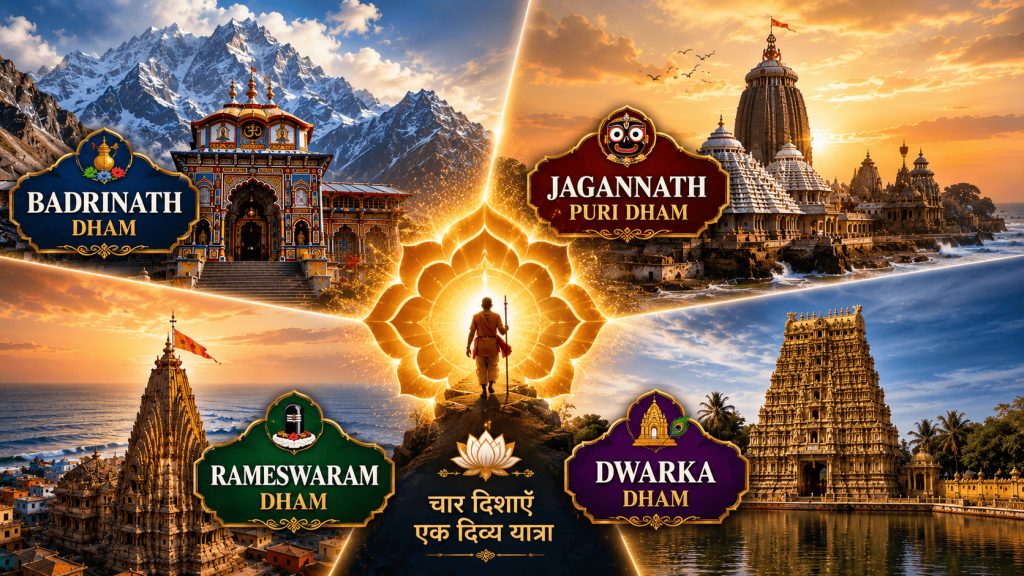
Char Dham Yatra Complete Guide will help you plan your pilgrimage to Badrinath, Jagannath Puri, Rameswaram and Dwarka with complete travel information. The Char Dham Yatra is one of the holiest pilgrimages in Hinduism and represents the spiritual heart of India. Every year, millions of devotees undertake the Char Dham Yatra to seek divine blessings, strengthen their faith, and experience the rich spiritual heritage of Sanatan Dharma. Char Dham Yatra Complete Guide 2026 / The four sacred shrines—Badrinath in the north, Jagannath Puri in the east, Rameswaram in the south, and Dwarka in the west—together form the Original Char Dham established by Adi Shankaracharya.
Unlike the Chota Char Dham in Uttarakhand, which includes Yamunotri, Gangotri, Kedarnath, and Badrinath, the Original Char Dham Yatra Complete Guide covers four different corners of India. Therefore, completing the Char Dham Yatra symbolizes a devotee’s spiritual journey across the entire nation.
Moreover, every temple represents a unique aspect of Hindu philosophy. While Badrinath symbolizes devotion to Lord Vishnu, Jagannath Puri celebrates the divine form of Lord Krishna as Jagannath. Similarly, Rameswaram honors Lord Shiva and Lord Rama, whereas Dwarka showcases the glorious kingdom of Lord Krishna.
Whether you are planning your first Char Dham Yatra or returning for another pilgrimage, this complete Char Dham Yatra Guide 2026 will help you understand the history, significance, and spiritual importance of these four sacred destinations.
What is the Char Dham Yatra?
The Char Dham Yatra refers to the pilgrimage of four sacred temples located in four different directions of India.
These four temples are:
- Badrinath Temple – North
- Jagannath Temple – East
- Ramanathaswamy Temple – South
- Dwarkadhish Temple – West
Together, these four holy temples form the Original Char Dham of India.
According to Hindu traditions, visiting all four temples during one’s lifetime is considered highly auspicious. Furthermore, many scriptures mention that completing the Char Dham Yatra Complete Guide helps devotees purify their minds, strengthen their devotion, and move closer to Moksha (liberation).
Consequently, the Char Dham Yatra remains one of the most respected and spiritually rewarding pilgrimages in India.
History of the Original Char Dham
The history of the Char Dham Yatra dates back more than a thousand years. During the 8th century, Adi Shankaracharya traveled across India to revive Hindu philosophy and strengthen the teachings of Sanatan Dharma.
As part of his spiritual mission, he identified four sacred temples in the four cardinal directions of India. These temples became known as the Char Dham, symbolizing the spiritual unity of the country.
Since then, saints, sages, kings, and millions of devotees have continued the sacred tradition of undertaking the Char Dham Yatra.
In addition, the pilgrimage encourages devotees to appreciate India’s cultural diversity. Although each temple follows different traditions, languages, and architectural styles, they all promote the same message of devotion, righteousness, and spiritual harmony.
Today, the Char Dham Yatra continues to inspire pilgrims from India and across the world.
Spiritual Significance of Char Dham Yatra
The Char Dham Yatra is much more than a religious tour. Instead, it is a spiritual journey that helps devotees deepen their faith and strengthen their connection with the Divine.
Each temple carries a unique spiritual message:
- Badrinath represents knowledge, meditation, and salvation.
- Jagannath Puri symbolizes compassion, devotion, and divine love.
- Rameswaram teaches humility, duty, and the importance of righteousness.
- Dwarka reflects wisdom, leadership, and devotion to Lord Krishna.
Furthermore, completing the Char Dham Yatra reminds devotees that God is present in every direction. As a result, pilgrims return with greater inner peace, gratitude, and spiritual awareness.
Badrinath Dham – The Sacred Abode of Lord Vishnu
Located in the majestic Himalayas of Uttarakhand, Badrinath Temple is one of the most revered temples dedicated to Lord Vishnu.
Situated at an altitude of approximately 3,133 meters, Badrinath is surrounded by snow-covered mountains, the Alaknanda River, and breathtaking natural beauty.
Every year, lakhs of devotees visit Badrinath Dham to seek the blessings of Lord Badri Narayan.
History of Badrinath
According to Hindu legends, Lord Vishnu performed deep meditation at this sacred place. During his meditation, Goddess Lakshmi protected him from harsh weather by taking the form of a Badri tree. Therefore, the place became known as Badrinath.
Later, Adi Shankaracharya rediscovered the idol of Lord Vishnu from Narad Kund and re-established worship at the temple.
Since then, Badrinath has remained one of the holiest pilgrimage destinations in India.
Spiritual Importance of Badrinath
Badrinath symbolizes liberation, devotion, and spiritual wisdom.
Many devotees believe that visiting Badrinath washes away past sins and brings them closer to salvation.
Moreover, the peaceful Himalayan environment allows pilgrims to experience meditation and divine tranquility.
Major Attractions Near Badrinath
- Tapt Kund
- Narad Kund
- Mana Village
- Vyas Gufa
- Ganesh Gufa
- Charan Paduka
- Vasudhara Falls
These attractions make Badrinath Dham an unforgettable spiritual destination.
Jagannath Puri – The Land of Lord Jagannath
Located on the eastern coast of India in Odisha, Jagannath Temple is one of the most sacred Vaishnav temples in the world.
Dedicated to Lord Jagannath, a divine form of Lord Krishna, the temple attracts millions of pilgrims every year.
The temple is also famous for the world-renowned Ratha Yatra, during which the deities travel in magnificent wooden chariots through the streets of Puri.
History of Jagannath Temple
According to ancient traditions, King Indradyumna built the Jagannath Temple after receiving divine guidance from Lord Vishnu.
Over the centuries, the temple became one of the most important centers of Vaishnavism.
The present temple structure was constructed during the 12th century under the rule of the Eastern Ganga dynasty.
Why is Jagannath Temple Unique?
The temple stands out for several fascinating traditions.
The idols of Lord Jagannath, Balabhadra, and Subhadra are carved from sacred neem wood instead of stone.
Additionally, the temple kitchen is considered one of the largest in the world. Every day, thousands of devotees receive Mahaprasad, which devotees regard as highly sacred.
Another remarkable feature is that the temple flag is changed every single day despite the challenging height of the temple.
Spiritual Significance of Jagannath Puri
Jagannath means “Lord of the Universe.”
Therefore, devotees from every background gather here to seek divine grace.
The temple teaches equality, compassion, and unconditional devotion.
Furthermore, the annual Ratha Yatra reminds devotees that the Lord comes out of the temple to bless everyone, regardless of caste, status, or background.
Why Every Devotee Should Complete the Char Dham Yatra
The Char Dham Yatra is not merely about visiting four temples. Instead, it represents a journey of faith, discipline, and spiritual transformation.
As pilgrims travel from the Himalayan heights of Badrinath to the sacred shores of Jagannath Puri, they experience the incredible diversity of India’s culture, traditions, and devotion.
Moreover, every destination teaches valuable spiritual lessons that continue to inspire devotees throughout their lives.

Rameswaram Dham – The Sacred Jyotirlinga of Lord Shiva
Located on the serene island of Ramanathaswamy Temple, Rameswaram Dham is one of the holiest pilgrimage sites in India. It holds a unique place in the Char Dham Yatra because it connects the devotion of Lord Rama with the worship of Lord Shiva. Additionally, it is one of the 12 Jyotirlingas, making it an important destination for both Shaivites and Vaishnavites.
Every year, millions of devotees include Rameswaram Temple in their Char Dham Yatra to seek blessings for peace, prosperity, and spiritual liberation.
History of Rameswaram Temple
According to the Ramayana, after defeating Ravana in Lanka, Lord Rama wished to worship Lord Shiva to seek forgiveness for killing Ravana, who was a Brahmin by birth.
Therefore, Lord Rama established a Shiva Lingam at Rameswaram and performed sacred rituals before returning to Ayodhya. This Shiva Lingam is worshipped today as Ramanathaswamy Jyotirlinga.
Another famous legend states that Lord Hanuman brought a Shiva Lingam from the Himalayas. However, since Hanuman returned late, Goddess Sita created a sand Lingam for the worship ceremony. Both Lingams remain deeply revered by devotees.
As a result, Rameswaram Temple became one of the most sacred pilgrimage destinations in India.
Spiritual Significance of Rameswaram
Rameswaram teaches an important spiritual lesson—humility before God.
Although Lord Rama is considered an incarnation of Lord Vishnu, he still worshipped Lord Shiva to set an example for humanity. Consequently, devotees believe that true devotion requires humility, gratitude, and righteousness.
Pilgrims also take a holy bath in the 22 sacred wells (Theerthams) inside the temple. Each well has unique spiritual significance, and devotees believe the holy water purifies both body and soul.
Major Attractions Near Rameswaram
- Ramanathaswamy Temple
- Dhanushkodi
- Pamban Bridge
- Agni Theertham
- Gandhamadhana Parvatham
Moreover, the magnificent temple corridor—one of the longest in the world—adds to the architectural beauty of Rameswaram.
Dwarka Dham – The Kingdom of Lord Krishna
Situated on the western coast of Gujarat, Dwarkadhish Temple is one of the most important pilgrimage destinations for devotees of Lord Krishna. It is believed to be the ancient kingdom established by Lord Krishna after leaving Mathura.
As the western pillar of the Char Dham Yatra, Dwarka represents divine wisdom, righteous leadership, and unwavering devotion.
History of Dwarka
According to the Mahabharata and various Puranas, Lord Krishna established the golden city of Dwarka after repeated attacks on Mathura by Jarasandha.
Ancient scriptures describe Dwarka as a magnificent city built with divine architecture. Many traditions also state that the original city later submerged into the Arabian Sea.
Today, archaeologists have discovered underwater structures near Dwarka, which continue to inspire research and interest among historians and devotees alike.
The present Dwarkadhish Temple has stood as a symbol of faith for centuries and welcomes millions of pilgrims every year.
Spiritual Importance of Dwarka
Dwarka symbolizes Lord Krishna’s role as a king, guide, and protector.
Devotees believe that visiting Dwarka strengthens faith, removes negativity, and inspires righteous living. Furthermore, the temple reminds pilgrims of Lord Krishna’s teachings on duty, compassion, and devotion.
Therefore, completing the Char Dham Yatra with a visit to Dwarka is considered spiritually fulfilling.
Major Attractions Near Dwarka
- Dwarkadhish Temple
- Bet Dwarka
- Nageshwar Jyotirlinga
- Rukmini Devi Temple
- Gomti Ghat
These sacred places beautifully complement the Char Dham pilgrimage.
Best Time to Visit Char Dham Yatra 2026
Although the Char Dham Yatra can be undertaken throughout most of the year, choosing the right season enhances the overall experience.
March to June
- Pleasant weather
- Ideal for sightseeing
- Comfortable temple visits
July to September
- Monsoon season
- Heavy rainfall in some regions
- Travel delays may occur, especially in the Himalayas
October to February
- Excellent for Puri, Dwarka, and Rameswaram
- Badrinath remains closed during winter due to snowfall
Therefore, April to June and September to November are generally considered the best periods for the Char Dham Yatra 2026.
Suggested Route for Char Dham Yatra
A practical route for completing the Original Char Dham Yatra is:
- Badrinath (North)
- Jagannath Puri (East)
- Rameswaram (South)
- Dwarka (West)
Many devotees also choose the opposite direction based on travel convenience. However, completing all four Dhams is considered spiritually significant regardless of the sequence.
Char Dham Yatra Travel Tips
To make your pilgrimage smooth and memorable:
- Book flights, trains, and hotels well in advance.
- Carry valid ID proofs.
- Wear modest and comfortable clothing.
- Respect temple customs and photography rules.
- Stay hydrated throughout the journey.
- Carry essential medicines.
- Keep digital and printed copies of your bookings.
- Follow local administration guidelines.
- Maintain cleanliness at every pilgrimage site.
- Avoid plastic waste and help preserve sacred places.
Additionally, senior citizens should consult a doctor before beginning the journey, especially if visiting Badrinath due to the high altitude.
Estimated Budget for Char Dham Yatra
The overall cost depends on your travel style.
Budget Trip
₹35,000–₹50,000 per person
Standard Trip
₹60,000–₹90,000 per person
Luxury Trip
₹1,20,000+ per person
These estimates generally include transportation, accommodation, meals, and local sightseeing. However, costs may vary based on the season and booking time.
Essential Packing List
Before starting the Char Dham Yatra, pack:
- Comfortable walking shoes
- Traditional clothing for temple visits
- Warm clothes for Badrinath
- Umbrella or raincoat
- Personal medicines
- Power bank
- Torch
- Water bottle
- Sunglasses
- Sunscreen
- Identity documents
- Cash and digital payment options
Packing wisely helps ensure a comfortable pilgrimage.
Frequently Asked Questions (FAQs)
1. What are the four Char Dhams in India?
The four original Char Dhams are Badrinath, Jagannath Puri, Rameswaram, and Dwarka.
2. Who established the Char Dham Yatra?
The Original Char Dham Yatra is traditionally associated with Adi Shankaracharya, who promoted these four sacred pilgrimage sites across India.
3. How many days are required for the Char Dham Yatra?
A complete Char Dham Yatra generally takes 12–20 days, depending on your itinerary and mode of transport.
4. Which Char Dham is dedicated to Lord Shiva?
Rameswaram is dedicated to Lord Shiva and is also one of the 12 Jyotirlingas.
5. Is Char Dham different from Chota Char Dham?
Yes. The Original Char Dham includes Badrinath, Jagannath Puri, Rameswaram, and Dwarka, whereas the Chota Char Dham refers to Yamunotri, Gangotri, Kedarnath, and Badrinath in Uttarakhand.
Conclusion
The Char Dham Yatra is far more than a pilgrimage—it is a journey across India’s spiritual landscape, connecting devotees with the timeless values of Sanatan Dharma. From the snow-covered peaks of Badrinath to the sacred shores of Rameswaram, from the divine chariots of Jagannath Puri to the holy city of Dwarka, every destination offers a unique experience of faith, devotion, and inner transformation.
If you are planning the Char Dham Yatra 2026, prepare your itinerary well, respect local traditions, and embrace the spiritual essence of each Dham. By completing this sacred pilgrimage with devotion and sincerity, you will not only visit four revered temples but also experience India’s rich cultural heritage and deepen your connection with the Divine.
Disclaimer: The information provided in this article is for educational, informational, and spiritual purposes only. Temple timings, travel routes, registration requirements, and other details may change over time. Please verify the latest information with the official temple authorities or government sources before planning your journey. The religious beliefs and legends mentioned are based on traditional Hindu scriptures and cultural practices.